Vermont’s housing shortage is no longer a future concern; it is a present crisis. Across the state, rental vacancies hover near zero, and home prices have soared beyond the reach of working Vermonters.[1] Yet even as the state pours millions into affordable housing initiatives, local zoning ordinances often stand in the way of building the homes that Vermont needs. Vermont’s land use provisions, designed to preserve scenic beauty and small-town identity,[2] now serve as a barrier to urgent housing needs.
The resulting tension between local control and statewide necessity defines Vermont’s affordable housing debate. While state lawmakers have passed legislation like S.100 (2023) to streamline housing development, the patchwork of municipal zoning codes under Title 24, Chapter 117 of the Vermont Statutes still dictates who gets to live where.[3] The state’s deep commitment to home rule and environmental preservation, though admirable, risks reinforcing class and racial segregation through law.[4]
Under Vermont’s Municipal and Regional Planning and Development Act, each town wields broad power over land-use decisions.[5] These local bylaws, often drafted by volunteer planning commissions, determine minimum lot sizes, density caps, and permissible housing types.[6] In theory, this allows communities to tailor growth to local needs. In practice, however, these bylaws often restrict affordable housing. For example, large-lot zoning in rural areas effectively excludes multifamily units and raises per-unit costs. Scholars have long identified this phenomenon as exclusionary zoning: a system in which seemingly neutral land-use regulations yield exclusionary outcomes by making housing unaffordable or inaccessible to lower-income residents.[7]
The Supreme Court cemented this framework in Village of Euclid v. Ambler Realty Co., where the Court upheld a zoning ordinance that segregated land uses in the name of order and aesthetics.[8] While Euclid’s rationale still anchors modern zoning, it has evolved into a tool of exclusion. The same logic that once protected residential tranquility now enables towns to reject the duplex next door.
Vermont’s strong environmental laws, especially Act 250, amplify this tension.[9] Enacted in 1970 to regulate large-scale development and protect natural resources, Act 250 requires detailed environmental review for most new projects.[10] Although it remains a cornerstone of Vermont’s environmental identity, critics argue that it unintentionally limits affordable housing construction by adding cost, delay, and uncertainty.[11]
Similarly, wastewater and septic regulations under Title 10 often limit higher-density housing even in suitable areas.[12] The paradox is striking: laws meant to preserve Vermont’s rural charm now contribute to its demographic decline. Vermont has preserved its landscape but priced out its people.
Recognizing these barriers, the Legislature passed the so-called “HOME Act” to reduce municipal gatekeeping.[13] The Act mandates that certain municipalities allow duplexes or triplexes in residential districts previously zoned only for single-family homes.[14] It also requires towns with designated downtowns or village centers to ease parking and lot-size restrictions and accelerates permitting for infill housing.[15]
Yet even this modest reform sparked intense backlash from local officials and residents, who viewed it as a serious threat to Vermont’s tradition of town control.[16] The debate exposed the fragility of Vermont’s home-rule ethos: when statewide needs collide with local autonomy, even minor reforms can trigger constitutional anxiety.[17]
From a policy standpoint, S.100 is progress. From a structural standpoint, it may be too little. Without a deeper rethinking of how local zoning power interacts with state goals, Vermont’s housing crisis will persist as a legal, not just economic, problem.
Many Vermont municipal zoning codes emphasize the importance of maintaining a town’s existing character. While the phrase character of the area appears neutral, scholars argue that community-character zoning operates as a subtle form of exclusion in land-use regulation.[18] Courts generally defer to local boards’ interpretations of character, rarely demanding evidentiary rigor.[19] This deference compounds structural bias: older, wealthier residents dominate public hearings, while renters, young families, and newcomers are rarely present.[20] The process thus replicates inequity under the guise of deliberative democracy.
Here, principles like facilitated dialogue and collaborative problem-solving could improve procedural equity in zoning processes.[21] Vermont’s existing mediation culture suggests a path for designing inclusive zoning deliberations that reduce the adversarial tenor of public meetings.[22] Just as mediation fosters understanding between disputants, structured facilitation may help bridge tension between ‘growth’ and ‘preservation.’
Vermont is hardly alone in grappling with exclusionary zoning. Oregon’s HB 2001 preempts local zoning to legalize “missing middle” housing statewide.[23] Massachusetts’ MBTA Communities Act links transit-oriented zoning compliance to state funding, pressuring municipalities to allow multifamily development.[24] California’s ADU reforms override local bans on accessory units entirely.[25]
Each model narrows the scope of local control in favor of statewide equity; a principal Vermont resists. As housing scarcity worsens, Vermont may have to adopt similar measures. Preemption need not mean abandoning Vermont’s participatory culture; it can mean redefining participation to include those historically excluded by process itself.
Vermont prides itself on community, yet its zoning laws too often privilege nostalgia over need. “Preserving character” should not mean preserving exclusion. A modern interpretation of Vermont’s land-use ethos would recognize that diversity is part of the state’s character.
State laws can no longer treat housing as a purely economic good or zoning as a purely local affair. Act 250 must expand to include housing justice; the future of Vermont’s landscape, and its communities, depends on it.
[2] 10 V.S.A. § 6086(a)(8) (2025) (“intended to preserve the aesthetics or scenic beauty of the area”).
[3]An Act Relating to Housing Opportunities Made for Everyone (HOME Act), 2023 Vt. Acts & Resolves 47; 24 V.S.A. §§ 4382(a)(1)–(2), 4411(a) (2023) (empowering municipalities to determine land-use patterns, residential density, and population distribution through planning and zoning bylaws).
[17]See Duffort, supra note 17 (discussing legislative resistance rooted in concerns over municipal autonomy); see also Berlin, supra note 17 (noting resident fears that infrastructure would bring unwanted state-driven housing growth).
[18]See Michael Lewyn, The Case Against the Case for Zoning, 35 Geo. Envt’l. L. Rev. 249 (2023).
[19]In re Appeal of JAM Golf, LLC, 185 Vt. 201 (deferring to zoning board’s interpretation of “character of the area” standard).
[20]See Sara C. Bronin, Zoning by a Thousand Cuts, 50 Pepp. L. Rev. 719, 761–62 (2023).
[21] Anika Singh Lemar, Overparticipation:Designing Effective Land Use Public Processes, 90 Fordham L. Rev. 1083, 1118 (2021).
[22] Patrick Field, Kate Harvey, & Matt Strassberg, Integrating Mediation in Land Use Decision Making, Land Lines Jan. 2009.
Generative artificial intelligence (GAI) is currently ubiquitous in the news and in the wider public discourse. Conversations range from optimistic speculation about how GAI can help humans to the pessimistic predictions of robot overlords taking charge—ok, the latter may just be the science fiction readers.[1] There is no doubt, however, that most people who are thinking seriously about using GAI recognize both its potential benefits and its potential dangers.[2] The legal profession is also currently exploring how GAI can both enhance representation of clients and raises concerns that lawyers must consider.[3]
This blog post examines lawyers’ adoption of GAI first through the lens of the American Bar Association (ABA) Standing Committee on Ethics and Professional Responsibility’s Formal Opinion 512 (the “Opinion”).[4] It then considers Everett M. Rogers’s innovativeness and adopter categories. Finally, this blog post argues that most lawyers should take the early majority or late majority approach to AI rather than seeking to be innovators or early adopters.[5]
Opinion 512, issued in 2024, uses the Model Rules of Professional Conduct to interpret the ethical responsibilities of lawyers who use GAI.[6] The Opinion states that lawyers’ responsibilities to their clients remain the same when using GAI as for other tools.[7] It then goes on to analyze how those responsibilities can be applied to the use of GAI in practice.[8] The Opinion discusses GAI in light of the duties of competence, confidentiality, communication with clients, supervision of non-lawyers, advancing meritorious claims, candor toward the tribunal, and charging reasonable fees.[9] This blog post will focus on the three duties of competence, confidentiality, and supervision.
One common area of concern for attorneys using any kind of technology is the duty of competent representation, which “requires the legal knowledge, skill, thoroughness and preparation reasonably necessary for the representation.”[10] Although technology is not mentioned in the text of the rule, Comment [8] notes that keeping up with technology is part of the requirement of competence.[11] The fast-changing nature of GAI may make this requirement more difficult, such that the Committee on Ethics and Professional Responsibility recommends consulting with technology experts, if needed, for help understanding the abilities and risks of a GAI tool.[12] Whatever means are chosen to better understand GAI tools under consideration, lawyers must recognize that they are accountable for the results those tools generate.[13]
Lawyers who use GAI must also ensure that they do not compromise clients’ confidential information.[14] The way that GAI develops and learns from past data also makes this responsibility more difficult.[15] Submitting one client’s information to a GAI tool may inadvertently lead to the disclosure of that information when the tool is used by another employee in the law firm, or even a person in a different firm who uses the same tool.[16] This can lead to an ethical temptation for lawyers—GAI tools that are built to protect client data will most likely be proprietary tools, which tend to cost more.[17] The motivation to keep costs down by using less expensive or free tools could lead to a costly result if client information is inadvertently disclosed.
Another area of obligation that lawyers must consider with GAI is the duty to supervise subordinate lawyers and non-lawyers.[18] Opinion 512 focuses on how this might impact required training of firm employees and considerations when hiring outside services.[19] A recent webinar presentation went further by describing AI as a “legal assistant.”[20] If firms begin to use GAI in the role of legal assistant, the nature of GAI may complicate the supervisory responsibilities of lawyers. Computer scientist Josephine Wolff noted that one of the differences between past technologies and GAI is the relative inability to predict what results a GAI tool will produce, even with extensive testing.[21] If attorneys and firms rely on a technology that produces unpredictable outcomes, they must consider instituting robust review procedures before making use of the work generated.
Competence, confidentiality, and supervision are all ethical duties of an attorney that may be complicated by using GAI.[22] Both GAI’s status as a newly evolving technology and its unpredictable nature require lawyers to exercise care in using this technology while still fulfilling their ethical obligations.[23] For these reasons, it may benefit lawyers who wish to use GAI to take a slower, deliberate approach to adopting this innovation in practice.
In Diffusion of Innovations, communications professor Everette M. Rogers considers how people react to new ideas and technologies and how innovations spread.[24] Within his work, Rogers describes five “ideal types” of “adopter categories,” or groups of people classed by the rate at which they are likely to embrace a new idea or technology.[25] The adopter categories are innovators, early adopters, early majority, late majority, and laggards or late adopters.[26] The categories range from those who not just adopt but seek out innovations to those who are the last to adopt an innovation, often well after it is an accepted practice within a community.[27] The position of this blog post is that most lawyers who are interested in GAI should wait to adopt it as part of the early majority or late majority.
The “majority” titles in both early majority and late majority provide one reason for taking this approach. In Rogers’s characterization, each of these categories make up about one-third of members in a community, so the two categories together make up two-thirds.[28] This means that once early majority and, especially, late majority adopters take on an innovation, it has gained wider acceptance within the community. This wider acceptance usually comes with more infrastructure, such as multiple options for well-developed tools and more resources for understanding the technology. More well-developed GAI tools may include a variety of options designed specifically for the practice of law, with safeguards related to confidentiality and supervision built in. More professional development resources will make it easier for lawyers to use GAI in a competent way. Rogers also shows a correlation between earlier adoption and a greater tolerance for risk and uncertainty.[29] In general, the ethical obligations of lawyers require reducing risk, such as ensuring the required knowledge of law, taking measures to avoid inadvertent disclosure of confidential information, and taking responsibility for the actions of subordinates.[30] Taking a later adoption mindset towards GAI naturally lowers the potential risk threshold for eventual adoption. Finally, there is a correlation between larger financial resources and earlier adoption.[31] For those who are solo practitioners or in small firms on a tight budget, waiting for the infrastructure to develop around GAI may make financial sense.
It should be noted that the innovator adopter category ideal types are descriptions of how people behave within a community.[32] While it makes sense for many lawyers to wait before adopting GAI, the innovators and early adopters within the legal community will pave the way for later adopters. Still, for those lawyers who are either worried about GAI taking their jobs or worried about the risks GAI poses, the recognition that a slower approach to innovation is a normal part of most innovation cycles may quiet fears about “keeping up.” Choosing to take a more deliberate approach will also empower lawyers to explore GAI tools in a manner that best upholds their ethical obligations.
[1]See,e.g., David Martin, AI in the Military: Testing a New Kind of Air Force, CBS NEWS (Oct. 5, 2025), https://www.cbsnews.com/news/ai-in-the-military-testing-a-new-kind-of-air-force/; For an example of a compelling science fiction novel in which an AI character both destroys and protects human life (sometimes at the same time), see Amie Kaufman & Jay Kristoff, Illuminae (2015).
[21] Josephine Wolff, Professor of Cybersecurity Pol’y & Comput. Sci., The Fletcher Sch., Tufts Univ., Panel on AI and the First Amendment at Vermont Law Review Symposium: Free Speech on Trial (Oct. 4, 2025).
[22] ABA Standing Comm. on Ethics & Pro. Resp., supra note 3, at 14–15.
The federal estate tax has long stood at the intersection of wealth, fairness, and public policy. When Congress first enacted the tax in 1916, it was rooted in a progressive ideal—ensuring the wealthiest Americans contributed to the public good and curbing the concentration of dynastic wealth that threatened democratic institutions.[1] Over a century later, the law’s structure and effect have drifted far from that purpose. Today, fewer than one in a thousand estates pay any estate tax at all.[2]
The original estate tax, created under the Revenue Act of 1916, imposed a base rate of one percent and a top rate of ten percent on estates over $5 million, with an exemption of $50,000.[3] By 1976, rates ranged from 18 to 77%, and the exemption had fallen to $60,000.[4] This steep progressivity reflected a belief that inherited wealth should serve the public rather than accumulate unbounded.
The trend reversed in the late twentieth century. The Tax Cuts and Jobs Act of 2017 (TCJA) lowered the top rate to 40% and doubled the unified gift and estate tax exemption to roughly $14 million.[5] The One Big Beautiful Bill Act (OBBBA) of 2025 then made both provisions permanent and indexed the exemption for inflation.[6] These changes dramatically shrank the number of taxable estates—from about 50,000 in 2001 to roughly 4,000 in 2023.[7] The Internal Revenue Service notes that the proportion of estates subject to tax is now the smallest in the law’s history.[8]
Although the estate tax was designed to be progressive, its modern structure produces the opposite effect. For 2025, the exclusion is $13.99 million per individual, rising to $15 million in 2026.[9] The top statutory rate remains 40%,[10] but because of the bracket structure, the effective rate declines for ultra-large estates. Analysts at the Brookings Institution describe this as a “regressive inversion,” where billion-dollar estates face a smaller proportional burden than smaller taxable estates.[11]The fiscal consequences are striking. In 2023, total estate tax liability amounted to $24 billion—less in real terms than the $24.6 billion collected in 2007.[12] In short, as wealth inequality has soared, the estate tax has contracted in both reach and revenue.
A central reason for this erosion lies in the step-up in basis rule, first adopted in 1921.[13] When a decedent passes property to heirs, the basis of that property resets to its fair market value at the time of death. This means decades of unrealized capital gains vanish for tax purposes.[14] For the wealthy, this feature effectively eliminates capital gains taxation on inherited assets.
This “angel of death” loophole allows the ultra-wealthy to hold appreciated assets indefinitely, borrow against them tax-free during life, and pass them to heirs who owe neither capital-gains nor income tax upon sale.[15] Both the Congressional Research Service and the Congressional Budget Office (CBO) have found that the step-up in basis results in tens of billions of dollars in forgone annual revenue and deepens intergenerational wealth concentration.[16] Yet repeal is politically difficult. The CBO has cautioned that taxing unrealized gains at death could create liquidity problems for heirs inheriting illiquid assets such as farms or small businesses.[17]
Policy debates generally revolve around two levers: (1) lowering the exclusion or raising the rate, and (2) modifying or eliminating the step-up in basis. Each approach has tradeoffs. Reducing the exemption would raise revenue quickly but could burden family-owned enterprises that are “asset rich but cash poor.”[18] Conversely, taxing unrealized gains at death would target only the wealthiest estates but introduce administrative complexity.[19] Empirical analyses suggest that addressing the step-up rule would yield the most progressive results over time, while rate or exemption adjustments would have more immediate but politically contentious effects.[20]
A pragmatic reform would preserve the step-up in basis for small and middle-class estates—protecting family farms, homes, and closely held businesses—while sharply increasing the top marginal rate for ultra-wealthy households. A 77% rate on estates exceeding hundreds of millions or billions of dollars would affect only the richest 0.01% of taxpayers while restoring fairness and fiscal capacity.[21] Historical precedent supports this approach: during the mid-twentieth century, when the top estate-tax rate reached 77%, the United States experienced both strong economic growth and high social mobility.[22]
The goal is not to punish success but to ensure that inherited wealth contributes proportionally to public needs. As the Brookings Institution notes, a reformed estate tax could “limit the transfer of vast quantities of wealth through generations” and serve as an effective tool for equality and revenue generation.[23] Reform requires both legislative coordination and public framing. Success would depend on coalition-building among legislators, economists, and advocacy groups—including the Brookings Institution, the Tax Policy Center, and labor organizations—to counter predictable opposition from high-net-worth lobbying groups such as the U.S. Chamber of Commerce.[24]
Framing the issue around fairness and fiscal responsibility, rather than partisanship, may offer the best path forward. Restoring a truly progressive estate tax would reaffirm its original purpose: ensuring that wealth serves the republic, not the other way around.
[1] Darien B. Jacobson, Brian G. Raub, & Barry W. Johnson, The Estate Tax: Ninety Years and Counting, 27 Stat. Income Bull. 118 (2007).
[16] Gravelle, supra note 9; Change the Tax Treatment of Capital Gains from Sales of Inherited Assets, Congressional Budget Office (Dec. 7, 2022), https://www.cbo.gov/budget-options/58691.
The recent increase in electric-vehicle (EV) use shows a promising future for carbon-free transportation, but it also generates hazardous waste through end-of-life lithium-ion batteries.[1] By 2030, millions of tons of EV batteries will reach the end of their use, posing risks of combustion, soil contamination, and metal toxicity in drinking water if improperly managed.[2] From a legal perspective, addressing this challenge requires more than increased recycling infrastructure. It also requires up-to-date legislation and legal frameworks capable of governing transboundary waste management, producer responsibility, and circular end-of-life resource economies. The European Union and United States currently outline two distinct regulatory frameworks. The EU internalizes its waste industries and adheres to the goals of international legal frameworks such as the Basel Convention, while the U.S. resists the global shift towards circular economies and strays away from international cooperation.
The Basel Convention and the U.S. Enforcement Gap
Adopted in 1989, the Basel Convention establishes a global regulatory structure to ensure that hazardous waste is disposed of “in the State where [it was] generated.”[3] In 1999, the Basel Convention added a supplementary agreement, the Protocol on Liability and Compensation, which aimed to create a legal structure for accidents involving transboundary movement of hazardous waste.[4] The Protocol established a system which identifies global actors liable for environmental damage through improper waste dumping and ensures compensation for personal and property damage along with providing costs of preventive measures to stop improper waste dumping.[5] Basel also introduced a 2019 Ban Amendment which prohibits exports of hazardous waste from Organization for Economic Cooperation and Development (OECD) to non-OECD countries.[6] The Convention’s ultimate goal is for each State to have a sovereign right to ban foreign waste imports and take on a duty to manage waste in an environmentally conscious manner.[7]
The United States signed but never ratified Basel and therefore it is not bound by the Ban Amendment nor the 1999 Protocol on Liability and Compensation.[8] Instead, the U.S. relies on the Resource Conservation and Recovery Act (RCRA) as its primary document dictating hazardous waste management.[9] Under § 6938, RCRA permits hazardous waste exports pursuant to bilateral or OECD agreements, such as with Mexico or Canada.[10] RCRA requires exporters of waste to provide advanced notice and obtain consent from the receiving country, identifying the facility and shipment details.[11]
At the federal level, there is no statute specifically governing end-of-life EV batteries. The Environmental Protection Agency (EPA) regulates them under RCRA and the Universal Waste Program, which consolidates collection and transport of certain hazardous material to ease the “regulatory burden on . . . generators that wish to collect these wastes.”[12] Several states are beginning to adopt their own methods to waste management akin to those we see on a national scale. California created the Lithium-Ion Car Battery Recycling Advisory Group in 2018,[13] which helped set up statutory frameworks like the Responsible Battery Recycling Act of 2022, establishing producer-responsibility programs for batteries and battery-embedded products, signaling a gradual shift toward circular waste management.[14] While such state initiatives signal progress, the absence of a unified federal framework leaves the United States without the cohesive, circular model emerging in other major economies.
Under its current regulatory framework, the United States continues to perpetuate downstream disposal in developing countries while also participating in the global waste economy primarily as a producer; thus, undermining both the global environmental justice efforts and the economic opportunity of end-of-life material recovery markets.
The European Union Circulatory Framework
Within recent years, the European Union has embedded Basel’s principles within its legislative scheme. The Waste Framework Directive, amended in 2018, shifts EU waste policy from disposal toward resource recovery and reuse, establishing Extended Producer Responsibility (EPR) programs that make producers financially and operationally responsible for managing products at the end of their life cycle.[15] Recital (7) of the directive explicitly highlights the circular-economy objective of reducing dependence on imported raw materials and increasing recycling and recovery of pre-used resources.[16] Pertaining specifically to EV batteries, the EU’s Battery Regulation 2023/1542 executes these principles through enforceable lifecycle regulations for EV battery producers.[17] By 2031, EV batteries sold in the EU must contain minimum percentages of recycled cobalt, lithium, and nickel.[18] Each battery must also carry a digital “battery passport” disclosing its composition, recycled content, and carbon footprint.[19] In doing so, the EU is on its way to creating a cohesive, unified, legal model for greener circular waste economies, especially for end-of-life EV batteries; a system that contrasts sharply with the United States’ fragmented approach under RCRA.
Comparative Analysis
When viewed side-by-side, these regimes reveal a clear legal divergence of the intended future of renewable materials. The European Union codified circular-economy principles into binding law that applies uniformly across Member States, integrating strict export controls, producer responsibility, and hazardous waste minimization. The United States, by contrast, continues to regulate under a statute (RCRA) drafted in and designed for a 1970s industrial economy. Despite its recent amendments, RCRA continues to promote a linear, disposal-based waste management that treats hazardous waste primarily as an endpoint rather than a potential resource.[20] Under the current structure, U.S. regulations remain fragmented by states, nationally dependent on export markets to manage its waste, and ultimately will rely more foreign markets for recycled materials.[21]
This divergence draws up legitimate economic concerns. U.S. recyclers and manufacturers are increasingly becoming excluded from Basel-compliant supply chains, while compliant nations, such as the EU and Canada, have moved to internalize their waste markets and develop new industries around recycled content, material recovery, and closed-loop manufacturing.[22] China’s 2020 Solid Waste Law banned most foreign waste imports, reflecting a broader shift toward domestic waste management systems, specifically from nations who used to be wase importers.[23] Other nations, including Malaysia and Thailand, have also started to reject global waste shipments on environmental grounds, turning their waste industries inwards.[24] These global policy shifts show how the United States could be isolated with its outdated, export-dependent model.
By continuing to externalize the environmental costs of its own production and consumption, the United States also risks eroding its credibility in international environmental governance. As the global waste sector transitions toward traceable, closed-loop waste recovery systems, the absence of a cohesive, federal circular framework may weaken its position in the emerging green-technology economy and suppress domestic innovation in the renewable energy sector.[25]
Conclusion
The EV revolution cannot credibly be called sustainable if the batteries that power it become the next generation of hazardous waste harming both people and the planet. As EV adoption accelerates, millions of lithium-ion batteries will reach end-of-life in the U.S. and simply be disposed without a cohesive national framework for collection, recycling, or reuse. By ratifying the Basel Convention and adopting legislation modeled on the EU’s Battery Regulation, Congress could transform the RCRA into a modern piece of legislation that looks towards clean-energy accountability and economic innovation. Such reform would establish a national extended-producer-responsibility program, create digital traceability for EV batteries, and promote domestic recycling industries to recover materials which can be reused for U.S. manufacturing, limiting material imports while also making the US a recycled material exporter. Whether the circular economy method ultimately offers the most efficient or equitable model for waste governance remains to be seen as the EU, China, and other global superpowers are just beginning their shift towards a circular structure. But the fact remains that inaction risks leaving the United States out of a growing industry born from its own waste.
[1]Amjad Ali et al., Sustainable Recycling of End-of-Life Electric Vehicle Batteries: EV Battery Recycling Frameworks in China and the USA, 10 Recycling 68, 76 (2025).
[2] Jay N. Meegoda et al., End-of-Life Management of Electric Vehicle Lithium-Ion Batteries in the United States, 4 Clean Technol. 1162 (2022).
[3] Basel Convention on the Control of Transboundary Movements of Hazardous Wastes and Their Disposal, Mar. 22, 1989, 1673 U.N.T.S. 57, Preamble.
[17] Regulation 2023/1542 of the European Parliament and of the Council of 12 July 2023 on Batteries and Waste Batteries, 2023 O.J. (L 191) 5, Annex I.
[25] Fazal Ur Rehman et al., The Nexus Between Circular Economy Innovation, Market Competitiveness, and Triple Bottom Line Efficiencies Among SMEs: Evidence from Emerging Economies, 30 Envt’l. Sci. & Pollution Res. 122274, 122277 (2023).
Book bans have far-reaching negative effects that threaten individual rights, educational integrity, and societal progress. They silence important voices and ideas, depriving students of stories that help them understand themselves and others—especially those about race, gender, or sexuality—thus erasing marginalized communities from the educational landscape.[1] Such bans undermine the fundamental right to read, a cornerstone of democracy, by restricting access to information and limiting the free exchange of ideas essential for personal growth.[2] Historically, censorship has been used as a tool of oppression—erasing dissent, hiding truths, and maintaining control—patterns that continue today through efforts to silence challenging or uncomfortable topics.[3] In education, particularly within school libraries, censorship hampers critical thinking and the ability to grapple with complex issues like mental health, social justice, and identity, impeding students’ development as independent thinkers.[4] Further these censorship efforts violate international human rights, which protect the right to access diverse ideas and information worldwide, directly undermining global principles of free expression and cultural diversity.[5]
The Case That Started It All: Island Trees v. Pico
The origins of contemporary book bans can be traced back to landmark legal cases that set the stage for ongoing censorship debates. A pivotal moment was the 1982 Supreme Court case Island Trees Union Free School District No. 26 v. Pico.[6] In Pico, a school board removed books from its library because they disliked their ideas—calling them “anti-American,”[7] “anti-Christian,” and “filthy.”[8] The Supreme Court ruled that such political or ideological censorship was unconstitutional.[9] The Court affirmed that students have a right to access diverse ideas, even if those ideas are controversial or unpopular, and that censorship motivated by disagreement with content violates the First Amendment.[10] This decision sent a clear message: schools cannot suppress ideas just because they find them inconvenient or uncomfortable.[11]
The ruling protected the fundamental right to access a broad spectrum of information and ideas, especially within the educational context where students’ rights and parents’ concerns intersect.[12] It emphasized that education, particularly through school libraries, should remain a space for free thought and inquiry, safeguarding the ability of young minds to explore complex issues and develop critical thinking skills.[13]
The Irony of Banning Books for “Vulgarity” and the Paradox of Parental Monitoring
A common argument against certain books is that they contain “vulgar” language or sexual content and are therefore inappropriate.[14] But here’s the irony: many of these bans target books that depict real-life issues—mental health struggles, grief, sexual violence, or identity—topics that are often discussed openly in health classes, textbooks, and online media.[15] For example, some schools ban books because they contain words or themes related to sexuality or violence, yet those same schools might have health textbooks with explicit images or descriptions. How can they justify banning a novel with honest portrayals of adolescent experiences while allowing explicit images in a health class? The inconsistency reveals that these bans are less about protecting children and more about controlling the narrative.
The inconsistency in how society or certain institutions approach censorship—such as banning some books while allowing explicit content elsewhere—reveals an underlying motive. If the primary goal was genuinely to protect children from harmful or inappropriate material, then the standards and actions would be consistent across all platforms, including school curricula, textbooks, media, and online content.
However, the fact that many banned books contain honest portrayals of complex, real-life issues—like mental health struggles, sexuality, or violence—while other sources, such as health textbooks or online media, include explicit images or descriptions without similar bans, suggests otherwise. The selective nature of these bans indicates that the real aim is not solely about shielding children from harm.
Some may suggest that parents want control in what their children read and that certain books should be banned or monitored. That’s understandable; parents want to shield their children from harmful content. But here’s the catch: children have access to the internet and tablets that expose them to far more explicit, harmful, or misleading content than anything found in schoolbooks.[16] Social media platforms are filled with images, videos, and messages that are often far more age-inappropriate than the books targeted in censorship campaigns.
If parents are genuinely concerned about content, shouldn’t they also scrutinize what their children are exposed to online? This inconsistency underscores an important point: banning books in schools does not shield children from uncomfortable or mature topics. Instead, it pushes those conversations into secretive, unregulated spaces online where children may encounter even more harmful material without guidance or context.
Why Censorship Is Dangerous for Society
Book bans are not merely about restricting access to individual titles; they pose a fundamental threat to the principles of a free and democratic society.[17] Suppressing ideas hampers the development of critical thinking, moral reasoning, and empathy.[18] By banning books that challenge traditional power structures or reveal uncomfortable truths, authorities can manipulate public perception and marginalize voices that question the status quo.[19] Moreover, the practice fosters a culture of fear and conformity, discouraging open dialogue and curbing curiosity.[20] Ultimately, this undermines core principles of free expression and diversity, which are vital for societal progress and the protection of individual rights.
What Can We Do?
Understanding the importance of the right to read is the first step in safeguarding intellectual freedom. The Pico case underscores that local school boards may not remove books from libraries simply because they dislike the ideas contained within them.[21] Such actions violate students’ First Amendment rights and threaten the open exchange of ideas essential to education and democracy.[22] We must actively oppose censorship efforts and support librarians, educators, and organizations fighting to preserve access to diverse ideas. Advocating for transparent, fair policies around book selection and challenge processes is essential. Recognizing that exposure to complex topics, when handled appropriately, is a vital part of education helps foster an environment where open dialogue, critical thinking, and understanding can thrive—principles reaffirmed by the Supreme Court in Pico.[23]
Conclusion
The fight over books is more than a debate about literature; it’s about the kind of society we want to be. Do we want a society that values free speech, diversity, and critical thinking, or do we accept a future where ideas are silenced, voices marginalized, and ignorance prevails? The landmark case Pico v. Island Trees reminds us that censorship motivated by disagreement with ideas is unconstitutional and unjust.[24] As we witness a wave of book bans today, it is more important than ever to stand up for the fundamental rights to read, think, and learn without fear or censorship. Protecting these rights is essential to preserving a free and open society.
[4]See generally Bd. of Educ. v. Pico,457 U.S. 853, 857 (1982).
[5] Censorship efforts, like banning books, directly contradict these principles by limiting individuals’ exposure to different perspectives, cultures, and beliefs. This restriction undermines efforts to promote free expression and cultural diversity worldwide, both of which are essential for fostering understanding, tolerance, and progress in an increasingly interconnected world. G.A. Res. 217 (III) A, Universal Declaration of Human Rights (Dec. 10, 1948).
Restrictive covenants in employee contracts—especially non-compete agreements (NCAs)—have become a focal point in recent employment law debates. NCAs restrict an employee from taking on a role that competes with their current employer.[1] Critics claim these covenants suppress wages, hinder worker mobility, and reinforce employer protections.[2] In response, the Federal Trade Commission (FTC) issued a 2024 ruling banning NCAs for many workers.[3] Despite the FTC’s decision, Florida’s Contracts Honoring Opportunity, Investment, Confidentiality, and Economic Growth (CHOICE) Act moves in the opposite direction.
Florida enacted House Bill 1219, also known as the CHOICE Act, in 2025.[4] The Act does not eliminate Florida’s existing restrictive covenant law,[5] but rather adds a new employer-friendly rule that presumes the enforceability of noncompete and garden leave agreements for certain employees.[6] The Florida Legislature enacted this bill to protect business investments, promote training and knowledge sharing, and provide greater certainty for employers in a competitive market.[7] Specifically, it seeks to clarify enforceability and extend protections for employers.[8]
Under the Act, a “covered employee” is one whose salary exceeds twice the annual mean wage for the Florida county where (1) the employer’s principal place of business is located, or (2) if the employer is out of state, the county in Florida where the employee resides.[9] Although the wording seems neutral, using county-level mean wage data to determine employee coverage is problematic. Two counties—Miami-Dade and Liberty—demonstrate how the CHOICE Act’s county-based wage threshold results in unequal outcomes for similarly situated employees. The legislature should replace the county metric with a uniform statewide wage standard to promote fairness and consistency in how Florida regulates noncompete agreements.
II. The Choice Act Creates Incidental Problems
A. Unequal Coverage by County
Consider two Florida workers, both earning $100,000 annually in similar roles. In 2024, Miami-Dade’s average annual wage was roughly $79,000.[10] Two times this amount is approximately $158,000—meaning the CHOICE regime does not cover this worker. In Liberty County, the average annual wage was roughly $48,150.[11] The threshold is approximately $96,000, making the same $100,000 earner a “covered employee” subject to up to four years of noncompete restrictions. Thus, employees with identical roles can face significantly different post-employment limits based on their geographic location. By tying legal exposure to local wage data, the CHOICE Act effectively turns county borders into determinants of worker rights.
B. Equal Protection Under State Law
Florida’s Constitution guarantees equal protection for its citizens and prohibits impairment of the obligations of contracts.[12] While the Court typically applies rational basis review to economic legislation,[13] it is difficult to see a logical link between a worker’s county wage averages and the Act’s legitimate interest in promoting trade and business within the state. This logical discrepancy also undermines Florida’s commitment to equal protection of all its citizens. Identical agreements will yield different outcomes across counties, undermining the aims the Act was designed to promote. The disparity falls hardest on workers in low-wage counties—those with fewer resources and who cannot afford to challenge employment contracts in court.[14]
C. Policy Consequences
In practice, the Act has at least three consequences. First, the Act deepens inequality. Rural and low-wage counties—those most in need of financial assurance—become subject to stricter noncompete rules. This process can concentrate economic advantages in more affluent regions while leaving struggling communities behind. Second, the Act permits employers to move their principal place of business to other counties, expanding their coverage under the Act. In a process analogous to forum shopping,[15] employers can expand coverage and suppress wages in lower-income areas. Third, the Act breeds ambiguity in an era of remote work; CHOICE never clarifies which county’s data applies when an employee resides in one location but performs services elsewhere. Together, these consequences undermine the Act’s stated goal of fostering statewide economic growth, instead entrenching existing disparities and limiting opportunities for the very workers and communities it claims to support.
III. A Statewide Standard for a Statewide Workforce
Florida can preserve the CHOICE Act’s legitimate aims while eliminating geographic inequity. The most effective reform is to replace the county mean wage test with a uniform statewide threshold.
A. Rationale for a Statewide Threshold
Currently, whether a worker is bound by a stricter noncompete depends not on the sensitivity of their position but on where they live. A statewide threshold—set as twice the statewide mean wage or a fixed salary cutoff (for instance, $100,000)—would preserve the Act’s intent to target higher-earning employees, while ensuring equal treatment across Florida’s 67 counties.
B. Advantages of UniformApplication
Equal Treatment: Every employee, regardless of geography, faces the same legal standard.
Predictability: Employers and workers avoid disputes over which county’s wage data applies, particularly for hybrid or remote employees. Predictability can also prevent overburdening court dockets, allowing for more efficient litigation.
Protection of Employer Interests: Employers still have tools to safeguard trade secrets and client relationships, ensuring all companies are on equal footing.
C. Implementation
The Legislature could amend the CHOICE Act to replace the county averages with the statewide mean wage, updated every two years by the Florida Department of Commerce (FloridaCommerce). Existing “covered” contracts could be grandfathered to minimize disruption, and courts should interpret the “principal place of business” provision flexibly to prevent abuse. This single statutory change would restore fairness and predictability without weakening employer protection.
Conclusion
Florida’s CHOICE Act attempts—but fails—to enforce restrictions on employees while promoting the economy. The primary issue is the Act’s reliance on county-specific wage data, which restricts the employment opportunities of certain employees. By coupling noncompete enforceability with local wage averages, the Act measures an employee’s worth to their zip code. This approach favors those in wealthier neighborhoods and disadvantages those in poorer areas, thereby limiting economic mobility. Reforming this Act with a statewide standard can bring consistency and fairness, while also protecting employer interests. Employers can still protect trade secrets, but employees now have more opportunities for economic mobility. This statewide baseline would reflect the realities of the modern workforce, where people are interconnected. Only with statewide standards can the Florida Legislature achieve its intended goal.
[2] Matthew S. Johnson, Kurt J Lavetti & Michael Lipsitz, The Labor Market Effects of Legal Restrictions on Worker Mobility, NBER Working Paper No. 31929 1, 6, 16 (2023).
[13] Williamson v. Lee Optical of Okla., Inc., 348 U.S. 483, 488 (1955) (holding state law regulating opticians did not violate the due process clause because economic regulations are presumed constitutional if plausible rational basis supports them).
[14]See Emery G Lee, Law Without Lawyers: Access to Civil Justice, 69 Univ. Miami L. Rev. 499, 502 (2015). (reporting median civil litigation costs of about US$15,000).
Can privacy exist in the digital age? Most at least hope (if not entirely expect) that our associations and communications are generally private and protected under the First and Fourth Amendments.[1] We figure that so long as we do not actively broadcast the intimate details of our lives to the world at large (e.g., taking obnoxiously loud phone calls in crowded public spaces, making incriminatingly controversial public social media posts, etc.), our dealings will remain our own.
But in recent years, technology has begun to shift expectations of privacy. Growing numbers of Americans are expressing concerns about how collected personal data is being used, both by private companies and by the government.[2] Many companies have responded with marketing campaigns highlighting end-to-end encryption features or on-device processing updates.[3] But these solutions fail to address the root cause of the public’s unease: bewildering privacy laws.[4] The fast-paced innovations of the private sector often seem to leave judicial processes in the dust. Many of the legal principles at the foundation of privacy law seem inapplicable and woefully dated. Perhaps the most major of these principles—the reasonable expectation of privacy test—is derived from the landmark Supreme Court decision, Katz v. United States.[5]
At issue in Katz was the warrantless wiretapping of a public telephone booth used for out-of-state gambling.[6] The government argued that because there was no physical penetration of the booth there had been no Constitutional violation, and the conversations overheard through the wiretap were thus admissible as evidence.[7] The Court disagreed.[8] It held that in light of certain technological developments, the Fourth Amendment’s privacy protections could no longer exclusively apply to physical trespasses but must instead be interpreted more broadly.[9] Though the majority is fairly vague as to the qualifying factors of this interpretation, Justice Harlan’s concurrence introduces a two-part test.[10] This test essentially laid the modern foundation for Constitutional privacy protections, requiring that (1) a person exhibits an actual (subjective) expectation of privacy, and (2) that expectation is one that society is prepared to recognize as reasonable.[11]
While initially this seemed like a fine enough test, its circularity became evident as society’s expectations evolved. In Smith v. Maryland, a little over ten years later, the Court applied the Katz test to determine whether an individual had a reasonable expectation of privacy in the phone numbers they dialed on their landline.[12] The Court determined that no right to privacy existed for two reasons.[13] Firstly, the individual, by dialing the numbers, knowingly conceded the information to the telephone company, i.e., a third party, and thus failed to exhibit an expectation of privacy.[14] Secondly, society would not deem this expectation of privacy reasonable because presumably everyone knows that telephone companies save this information for billing purposes.[15] Justice Marshall dissented, with the cryptic warning that the legitimacy of our privacy expectations should not be nullified by our inevitable use of third-party technology that has become an indispensable part of modern life.[16]
Fast forward another thirty years or so and the cracks of the Katz test spread further. In United States v. Jones, the Court inquired whether the government’s installation of a tracking device on an individual’s car constituted an unlawful search.[17] The Court found that it did, but rather than applying its usual Katz analysis, the Court reverts to the traditional trespass doctrine, on the basis that this case involved the physical installation of a device on the individual’s property.[18] Yet two prophetic concurrences were frustrated by the missed opportunity to reevaluate Katz in relation to modern surveillance powers.
The concurrences, written by Justices Sotomayor and Alito, discuss the potential complications of the circularity of the Katz test. Justice Sotomayor points out that the third-party doctrine derived from Katz is “ill-suited to the digital age, in which people reveal a great deal of information about themselves to third parties in the course of carrying out mundane tasks.”[19] This “great deal of information” is often disclosed only for a limited purpose and should not lose all Fourth Amendment protections in that process.[20] Justice Alito then draws attention to the fatal flaw of the Katz test: its assumption that society has developed a stable, unchanging set of privacy expectations at all.[21] Justice Alito notes that the Katz test rests on the assumption that a hypothetic reasonable person has a well-developed and stable set of privacy expectations that remain consistent in the face of dramatic technological change. [22] But this is an unrealistic assumption—popular expectations may fluctuate as society seeks increased convenience and security at the expense of privacy; even those that do not find the tradeoff worthwhile may consider the loss of privacy inevitable.[23]
Both Justice Sotomayor’s and Justice Alito’s concerns are perhaps best illustrated by current public sentiments. There is an overwhelming concern regarding personal data usage and a notable discrepancy between the level of privacy society has come to “expect,” and the level of privacy it would prefer (and presumably deem reasonable). With data collection technology developing at such a rapid pace, it is hard for any person to have a solid idea of which privacies are protected. It may be time for the Court to refine its definition of “reasonable expectations.”
[17] United States v. Jones, 565 U.S. 400, 402 (2012).
[18]Id. at 404–05 (reasoning that by mounting a GPS tracking device on an individual’s car, the Government had physically occupied private property for the purpose of obtaining information – an action that would undoubtably have been considered a trespassory “search” within “the meaning of the Fourth Amendment when it was adopted.”).
[19]Jones, 565 U.S. at 417 (Sotomayor, J., concurring).
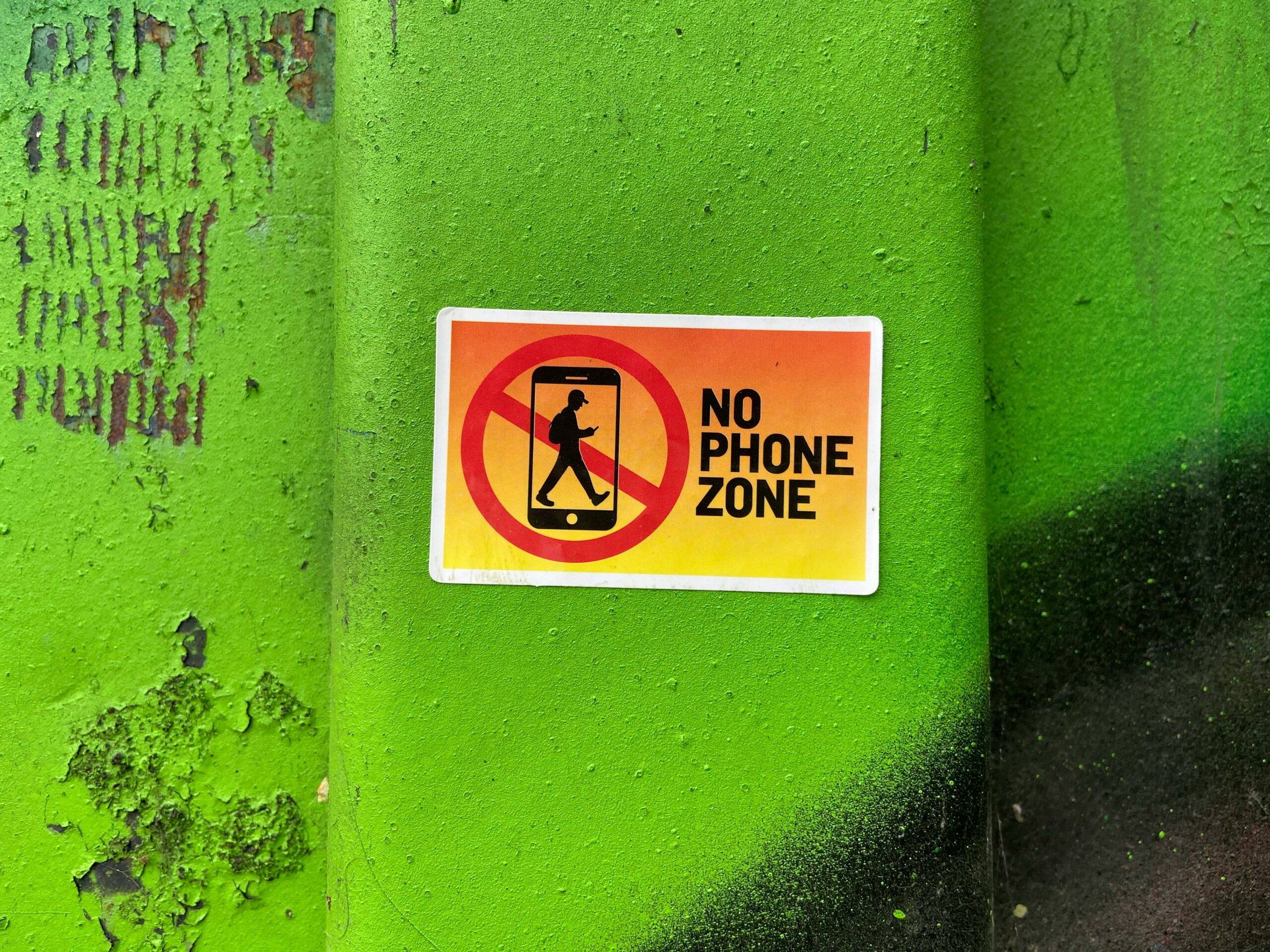
Few objects command more loyalty from American teenagers than the glowing rectangles in their pockets. Cell phones have become lifelines, entertainment consoles, and—at least in theory—educational tools. Yet they are also distractions of the highest order. As one New Hampshire student recently admitted, a statewide ban on school-day phone use forced him to actually “do work” during downtime.[1] That confession might make any teacher smile.
This blog post examines the emerging legal and policy landscape of cell-phone bans in public schools, with particular focus on New Hampshire’s new statewide “bell-to-bell” prohibition. It also considers Vermont’s parallel efforts, nationwide trends, and developments abroad. While bans like New Hampshire’s likely advance learning and social well-being, their legal implications—touching on parental rights, due process, and even the First Amendment—remain unsettled.
I. States Look to Restrict Cell Phones in Schools A. New Hampshire’s Bell-to-Bell Ban
In June, New Hampshire Governor Kelly Ayotte signed a state budget bill including a legislative amendment requiring school boards and charter school trustees to adopt “bell-to-bell” cell-phone bans.[2] Under the new law, students are barred from using cellphones from the first bell to start instructional time until end-of-day dismissal, including during lunch and class transitions.[3] Exceptions exist for medical devices (such as insulin pumps and glucose sensors), accommodations identified in individualized education programs (IEPs), plans developed under Section 504 of the Rehabilitation Act of 1973, and language-access needs under Title VI of the Civil Rights Act of 1964.[4]
Governor Ayotte championed the measure as a way to “restor[e] classrooms as spaces dedicated to learning, collaboration, and student well-being.”[5] A gubernatorial press release framed it as a win for students’ focus, teachers’ sanity, and parents’ peace of mind.[6] Supporters cited research linking excessive screen use with adolescent anxiety, depression, and sleep deprivation, as well as school-level data showing reduced behavioral issues and cyberbullying when phones are banned.[7] In other words, New Hampshire has embraced the radical notion that schools are for education, not Snapchat.
B. Vermont: Following Close Behind
Neighboring Vermont has enacted a similar law to take effect for the 2026–27 school year.[8] But many Vermont schools have already experimented with restrictions. Teachers at Spaulding High School in Barre require students to surrender phones on a classroom counter at the start of class.[9] Harwood Union Middle and High School adopted Yondr magnetic lock pouches, funded in part by leftover federal COVID-19 relief money.[10] Thetford Academy, serving as a public school for several towns, banned phones even before the statewide mandate after a community advocacy campaign garnered strong support for immediate action.[11]
Vermont educators report familiar frustrations: students distracted by social media, parents texting midday, and the awkward phenomenon of a cafeteria full of teenagers staring silently at screens.[12] Teachers describe phone-free days as restoring authentic conversation and student attentiveness.[13] Don Tinney, president of the Vermont chapter of the National Education Association, posed the rhetorical question: “If we can’t get a handle on this in our schools, where will we get control over these digital devices?”[14]
C. Nationwide Developments
New Hampshire and Vermont are hardly alone. More than half of U.S. states have adopted restrictions.[15] Texas, for instance, passed House Bill 1481 in May, 2025, requiring districts to curtail phone use.[16] Teachers there report more eye contact and—quaintly—students rediscovering Uno cards.[17]
New York recently mandated magnetic pouches statewide.[18] Students keep their phones but cannot unlock them until the school day ends, a system praised by administrators but tested by enterprising teens who attempt to dismantle the pouches.[19] Florida led the charge in 2023 by banning phones outright during instructional hours, and other states quickly followed.[20]
The sheer diversity of approaches—total bans, pouch systems, “out of sight, out of mind” policies—underscores the lack of consensus on how to balance discipline, safety, and practicality.
II. Benefits and Concerns
The reasons to restrict phones are well-documented. Phones distract from academic work, facilitate cheating, perpetuate cyberbullying, and exacerbate mental health challenges.[21] Schools report that bans improve engagement and reduce disciplinary incidents.[22] The U.S. Surgeon General has even warned that social media poses “a profound risk of harm” to youth mental health and well-being.[23]
Yet there are counterpoints. Phones provide parents peace of mind during emergencies, assist with after-school logistics, and serve as educational tools when properly integrated.[24] Some parents view confiscation or extended retention of devices as infringing upon their due process rights to direct their children’s upbringing.[25] Enforcement also strains school resources and may foster resentment.
Even students themselves are ambivalent. As one Vermont high schooler acknowledged, “every student … does know they’re addicted to their phone,” but that does not make giving it up easy.[26]
III. Legal Framework and Challenges A. Parental Rights and Due Process
A prominent concern is whether school bans impermissibly interfere with parents’ constitutional rights. Plaintiff families have argued that confiscation and retention policies beyond school hours may violate the Fourteenth Amendment due process rights of parents to direct the upbringing of their children.[27] Courts have historically recognized this right, though its scope in the educational context remains contested.[28]
B. Free Speech and the First Amendment
Two classic precedents—Tinker[29] and Hazelwood[30]—establish that students retain constitutional rights but that schools may regulate expression when necessary to preserve order or educational purpose. Some scholars suggest that outright phone bans could implicate students’ right to receive information in the digital era.[31] Mary Beth Tinker herself has expressed skepticism about unfettered phone use, noting the documented harms to youth health.[32]
Still, a phone is not inherently “speech,” and bans typically regulate the device rather than content. Courts would likely uphold restrictions narrowly tailored to educational goals, particularly with exceptions for medical and disability accommodations.[33]
C. Privacy and Enforcement
Confiscation policies raise privacy concerns. For example, what happens if a teacher inadvertently views private messages or data on a seized device? Scholars caution that schools must tread carefully to avoid Fourth Amendment violations.[34]
D. Comparative Perspective: The United Kingdom
The debate is not uniquely American. In July, two British fathers launched a legal challenge against the British Department for Education, arguing that failure to mandate schoolwide bans violated children’s human rights.[35] They seek a judicial review to compel a nationwide prohibition, citing concerns about exposure to pornography and violent content.[36] Meanwhile, political leaders remain divided; current Prime Minister Keir Starmer has dismissed mandatory bans as unnecessary, noting that most schools already restrict phones.[37]
The British litigation highlights a novel twist: framing smartphone access as a human rights issue, not merely a matter of discipline. Whether such arguments will persuade British courts remains to be seen, but the case underscores the global resonance of the debate.
IV. Policy Considerations
From a policy standpoint, bell-to-bell bans simplify enforcement, promote equity, and minimize distraction. But implementation costs—pouches, staff training, security infrastructure—can be substantial.[38] Moreover, blanket bans may ignore legitimate educational uses of smartphones for language learning, research, or accessibility. A nuanced approach may be preferable, though nuance is often harder to enforce than a flat rule.
Ultimately, the law grants schools broad latitude to regulate student conduct, provided policies are reasonable, nondiscriminatory, and respectful of constitutional limits. Still, as potential litigation looms, states would be wise to draft bans with explicit exceptions, parental consultation, and annual review processes—as New Hampshire’s law already requires.[39] Of course, including student voices where feasible should certainly be encouraged as well.[40]
Conclusion
Some teenagers may view phone bans as cruel and unusual punishment, but the evidence suggests otherwise. From New Hampshire to Texas, schools report increased focus, better mental health, and even more human conversation when phones are set aside. That said, unresolved legal questions remain. How far schools can go without infringing parental rights? Do such bans implicate free speech rights? How enforcement avoids privacy violations?
New Hampshire’s bell-to-bell model seems to offer a promising blueprint. It balances firm restrictions with necessary exceptions, signals a cultural shift toward reclaiming schools as learning spaces, and recognizes the gravity of the distraction problem. Whether courts ultimately bless such laws will determine if “phone-free schools” become a permanent fixture or a passing experiment. For now, though, the message is simple: put the phone away—your civics assignment awaits.
[3] N.H. Dep’t of Educ., Technical Advisory: Guidance to Public and Chartered Public Schools for Implementing HB2’s “Bell to Bell” Prohibitions on Student Cell Phones and Personal Electronic Communication Devices (2025).
[28]See, e.g., Koch v. Adams, 361 S.W.3d 817, 821 (Ark. 2010) (rejecting a student’s challenge to a school policy that allowed cell-phone confiscation during class, finding the policy constitutional and within the school’s authority to enforce discipline under such rules); Price v. N.Y.C. Bd. of Educ., 855 N.Y.S.2d 530, 537 (N.Y. 2008) (upholding city’s ban on students bringing cell phones to school, reasoning that it was reasonably related to educational objectives and did not unduly restrict communication outside school hours).
[29] Tinker v. Des Moines Independent Community School District, 393 U.S. 503 (1969).
[30] Hazelwood School District v. Kuhlmeier, 484 U.S. 260 (1988).
Imagine you’re looking for a housemate. You put an ad out online and find someone who seems trustworthy. You don’t have the capability to do a formal background check; yet, everything about them seems legitimate. Then, a month later, unannounced, probation officers search your home. They find recreational drugs in the common area and arrest your housemate, calling the police to help them secure the drugs. The police come and search the rest of the house, including your bedroom, where they find more recreational drugs. They arrest you and bring possession charges against you. Was that search legal? Should it be?
The Fourth Amendment to the United States Constitution guarantees our protection against “unreasonable search and seizures.”[1] It further protects us from searches performed without warrants, or under warrants which fail to describe the place or person to be searched.[2] However, probation agreements typically require the probationer to waive these fourth amendment rights.[3] Allowing probation officers to search the probationer’s property for any violations of their agreement—drugs, weapons, contraband—makes sense. Probation is a much more economical alternative to incarceration and is typically seen as both more effective and better for the probationer.[4]
To ensure these programs succeed, the government needs a method to sustain them. Consented-to warrantless searches of probationers’ properties are one such method.[5] Probationers can live with non-probationers. These non-probationers are not party to the probation agreement and therefore haven’t expressly consented to waiving their Fourth Amendment rights. At the federal level, probationers “must warn any other occupants that the premises may be subject to searches pursuant” to their probation agreement.[6]
Both federal and state courts have generally held that anyone knowingly living with a probationer has a diminished right to privacy.[7] Specifically, that the probationer’s consent via their probation agreement renders valid any warrantless search of areas of “shared authority.”[8] This is intuitive. If you know the person you live with is a probationer subject to unannounced, warrantless searches, it follows that you have consented to those searches.[9] By volunteering to live with the probationer, you have volunteered to the conditions of their probation that affect your shared spaces.
But what if you didn’t volunteer to live with a probationer? In our hypothetical, we discussed a situation in which the non-probationer was unaware that their housemate was on probation. The rules from Matlock tell the probationer to warn other occupants of the potential for searches.[10] However, no probation officer would know of any failure to disclose or be able to enforce disclosure until they showed up to the house. Probationers have incentive to not disclose their status to potential roommates to obtain housing. As a result, the burden would be on the potential housemate to ensure they had checked probation records before allowing a new roommate into their home. This seems unfair and unreasonable to expect a layperson to understand this as a risk.
If the probationer did not disclose their status, a housemate would have no way of knowing a search was coming. The Supreme Court’s theory that by knowingly deciding to live with a probationer you’ve consented to the conditions of their probation would “evaporate.”[11] If you don’t know that your housemate is a probationer, you can’t consent to the elements of their agreement which necessarily effect you. Without that consent, any search would not only be without a warrant but would be executed against a person who had not waived their Fourth Amendment rights. Such a search would be unconstitutional.[12] Likewise, any evidence gathered because of a search would be inadmissible.[13] This is a significant gap in the law, which creates the substantial possibility that the Fourth Amendment’s protection of the people of the United States can be flouted quite easily. This gap seems to be unaddressed by the Supreme Court or Federal legislation. It is certainly not fixed by the Federal Probation-Conditions Statute.[14] A search of state statutes likewise turns up little.
The reason for this lack is cited by the Minnesota court in State v. Bursch: courts are unwilling to make rulings on something that could “effectively thwart all probation searches.”[15] One can follow their logic. Exempting any evidence found in a probation search where it could potentially belong to an unknowing household member would create a significant loophole. A strategic probationer would choose to live with housemates to avoid unannounced searches.[16] If this were the case, probation officers would likely cease searching any probationer’s premises if another person lived on it. After all, if any evidence they gathered could be dodged by a claim that it belongs to the unknowing non-probationer why spend the time and money on a search?
So, we find ourselves with a dilemma. Either an unknowing household member is subject to warrantless search or seizure because of their Probationer roommate; or the probationer’s agreement can’t be appropriately enforced. A few cases address this. They have held that evidence found in a search and used against a non-probationer is void if the search was conducted over the “express refusal of consent by a physically present resident.”[17] However, this does not address an issue where a search is conducted when only the Probationer is home, or when no one is home.
This gap must be filled. A statute to address the ambiguity that searches in these circumstances produce. The language of that statute should show proper deference to the Fourth Amendment. Its exact language will not be speculated on here, but it should ensure that probation and parole officers cannot execute a search without a warrant where a non-probationer household member might be unaware of their housemate’s status. Further, this burden of ensuring knowledge should be placed on either the probationer or the probation officer, not the unwitting housemate. That could be as simple as the probationer providing other occupants’ names and contact information, and probation officers ensuring notification of those occupants before commencing the normal unannounced search schedule. Alternatively, it could consist of the housemates signing affidavits or waivers that the probationer delivers to probation upon their initial notification of address. No matter the method, this ambiguity needs a solution which alleviates the burden to an unwitting housemate. A statutory solution would be the clearest and most efficient, and both federal and state legislatures should work to ensure this gap in our law is rectified.
[7]See United States v. Matlock, 415 U.S. 164, 94 S. Ct. 988 (1974) (confirming a non-probationer knowingly living with a probationer have diminished freedoms from warrantless searches); see also United States v. Harden, 104 F.4th 830, 834 (11th Cir. 2024); State v. Bursch, 905 N.W.2d 884 (Minn. Ct. App. 2017); State v. Green, 349 So. 3d 503 (Fla. Dist. Ct. App. 2022).
The American criminal justice system is built on the promise of a fair trial. That promise falters when prosecutors pursue cases against defendants with significant mental impairments or fail to carry their burden. Current competency standards, shaped by Dusky v. United States,[1] focus narrowly on a defendant’s ability to communicate with counsel. Ambiguities in the law, lenient procedures, and inconsistent psychiatric evaluations create a system where incompetent defendants may still face trial, while others may be released without ever receiving the treatment needed. Strengthening these standards is essential to protect due process and ensure that justice is not just procedural, but actual.
One of the fundamental principles of the American criminal justice system hinges on the idea that prosecuting an individual who is mentally incompetent violates due process.[2] This right ensures a fair trial, as according to the Supreme Court in Medina v. California competence is considered “the foundational right for the effective exercise of a defendant’s other rights.”[3] These rights include, but are not limited to, the right to counsel, to confront witnesses, and to testify or remain silent.[4] The current standard for competency to stand trial is articulated in Dusky v. United States.[5]Dusky requires an accused to have “sufficient present ability to consult with his lawyer with a reasonable degree of rational understanding. . . and [must have] a rational as well as factual understanding of the proceedings against him.”[6] The existing legal framework and its practical application reveal several areas where stricter competency standards are necessary to vigorously uphold this fundamental due process right while also balancing the need to protect the welfare of the people.
The flexibility and the ambiguity in applying the Dusky test is a significant aspect that suggests this need for stricter standards. Namely, the mere presence of “some degree of mental illness” or “limited intellectual ability” does not automatically render the accused incompetent.[7] These are “merely relevant factors” to be considered in the midst of proceedings.[8] Furthermore, the use or addiction to illegal substances does not result in incompetence, though “the influence of drugs or the effects of drug withdrawal” could be debilitating enough.[9] This broad consensus can inherently lead to a slippery slope of impaired individuals being deemed competent or competent individuals being deemed incompetent. The spectrum is wide. A stricter standard would require that such significant mental health conditions or severe substance use disorders create a stronger presumption of incompetence that would require the state to meet a higher burden to prove otherwise.
The distinction between a defendant’s capacity to assist counsel and their actual willingness to do so also presents a unique point of concern. The standard focuses on the accused’s “capacity to assist in preparing his or her defense,” not “whether he or she actually cooperates.”[10] This means a defendant who essentially can coherently confer but refuses to engage with their attorney could still be found competent. Even if this behavior is due to paranoid delusions or severe apathy.[11] For instance, even where an accused who spent court sessions scribbling bizarre pictures and muttering conspiracy theories, experts can agree he is still deemed competent to stand trial, despite his inability to sustain a rational conversation. This highlights how a purely “capacity” focused standard overlooks the ultimate inability of an accused to mount an effective defense. This can justify a shift towards requiring active engagement or a more definitive assessment of the underlying reasons for the non-cooperation.
Additionally, the Supreme Court’s decision in Medina v. California introduced a type of procedural leniency that directly undermines the protective intent of the competency doctrine.[12]Medina allows states to establish a presumption of competence and requires the defendant to bear the burden of proving incompetence by a preponderance of the evidence.[13] This decision was heavily criticized by Justice Blackmun and Justice Stevens in the dissent, who argue that “a Constitution that forbids the trial and conviction of an incompetent person tolerates the trial and conviction of a person about whom the evidence of competency is so equivocal and unclear.”[14] Justice Blackmun also emphasizes that “the right to be tried while competent is the foundational right for the effective exercise of a defendant’s other rights.”[15] Requiring a potentially incompetent defendant to prove their own mental incapacity introduces an “unacceptably high risk that persons will be tried and convicted who are unable to follow or participate in the proceedings determining their fate.”[16] This dissent essentially highlights that the State is in a superior position to gather evidence of competency over a defendant. The State has direct, unfettered access to a defendant in custody and possesses the resources for the necessary psychiatric evaluations and commitment if needed.[17] Stricter standards would necessitate placing the burden of proving competence on the prosecution in order to adequately protect the underlying due process right.[18] This would further align with other instances where the government bears the burdens for issues that implicate certain constitutional rights.
The nature of psychiatric testimony and its application in competency evaluations also point to weaknesses in the current standards. Psychiatry is acknowledged as an “inexact science,” where “subtleties and nuances of psychiatric diagnosis render certainties virtually beyond reach in most situations.”[19] Clinicians often confuse legal incompetency with psychosis, or may overdiagnose incompetence for humanitarian reasons, or even underdiagnose due to a lack of legal sophistication.[20] This lack of accuracy and potential for misinterpretation means that the “legal question of competency” may not be sufficiently addressed.[21] Stricter standards would require psychiatric evaluations to focus explicitly on the Dusky[22] criteria and the defendant’s functional abilities in the legal context, not just clinical diagnoses. This could create a likelihood of enhancing the overall reliability of the findings. Moreover, Drope v. Missouri cautions that a defendant’s demeanor during trial “cannot be relied upon to dispense with a hearing on that very issue” of competence, specifically when there is “uncontradicted testimony of . . .[a] history of pronounced irrational behavior.”[23] This warning suggests that surface-level impressions of alertness should not outweigh substantial evidence of impairment. Stricter standards would elevate the weight given to complex medical histories and consistent patterns of specific behavior, rather than courtroom demeanor. Additionally, a court may impose a higher standard of competence for a defendant seeking to represent themselves than for merely standing trial. This directly acknowledges that the Dusky standard[24] for simply standing trial might not be sufficient for full engagement in the judicial process.[25] This disparity suggests that the baseline standard for competency to stand trial may itself be too low.
Stricter competency standards would benefit society as a whole by reinforcing the principle of a fair and just criminal justice system. By rigorously ensuring that only individuals with a “sufficient present ability to consult with his lawyer with a reasonable degree of rational understanding . . . and a rational as well as factual understanding of the proceedings against him” stand trial, the government upholds its burden of due process.[26] It would also help protect the overall integrity and public confidence in judicial proceedings and state officials. Nevertheless, this approach could also lead to more accurate adjudications. More accurate adjudications could then help reduce the fiscal and administrative burdens associated with repeated, lengthy, and unnecessary competency evaluations and hospitalizations.[27] This approach would allow a more efficient allocation of both mental health and legal resources.
In summary, the Constitution demands more than a mere inquiry into competency; it requires a safeguard against putting someone on trial who inherently cannot defend themselves. The Dusky standard[28], as applied today, is riddled with ambiguities that tilt the scales against the accused and allow the State to avoid its duty and not bear their burden. Stricter, clearer standards would close those gaps, force the government to prove competence, and ensure trials reflect true fairness.
Error: Only up to 6 widgets are supported in this layout. If you need more add your own layout.
Submissions The Vermont Law Review continually seeks articles, commentaries, essays, and book reviews on any subject concerning recent developments in state, federal, Native American, or international law.