
Child Welfare Rights Versus a Mother’s Right to Rear Children: Do Prison Nursery Programs Benefit Both?
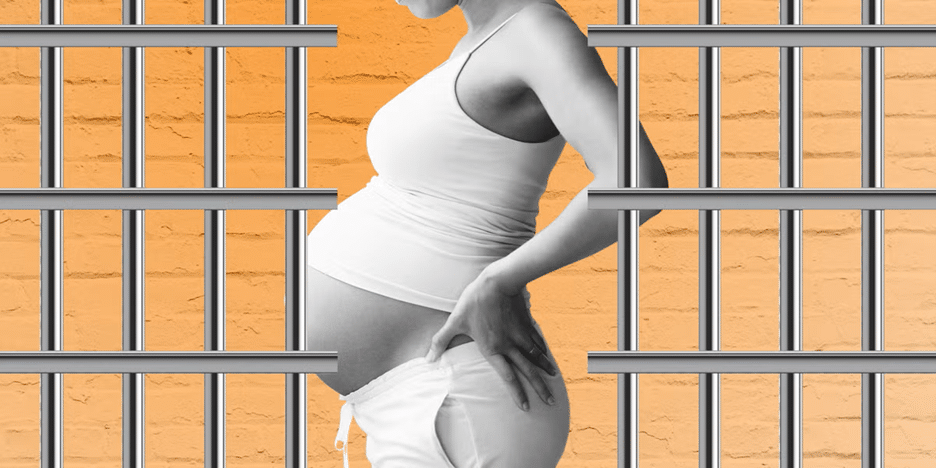
Child Welfare Rights Versus a Mother’s Right to Rear Children: Do Prison Nursery Programs Benefit Both?
By Anna VanRoy
Prison Nursery Programs (PNP) highlight the complex balance between protecting child welfare and honoring a mother’s right to parent, even within the confines of incarceration. Courts often prioritize a state’s authority to incarcerate over maternal rights. Programs in New York and Illinois demonstrate that with proper oversight and support services, safeguarding both the child’s well-being and the mother’s rehabilitative potential is possible. When implemented effectively, PNP’s not only promote healthy early child development but also foster accountability, stability, and stronger family connections—benefiting both mother and child in the long term.
Many women experience pregnancies and even childbirth while behind bars. More women experience this today as incarceration rates have increased.[1] Almost one million women and girls are either incarcerated or on probation or parole.[2] U.S. state and federal prisons, local and regional jails, immigration detention centers, military prisons, Tribal jails, and other so-called correctional facilities hold nearly 172,700 females.[3] Among this group of women, approximately one in 25 enter jails or prisons pregnant.[4] As a result, the number of babies born to mothers who are behind bars has also grown at an alarming rate.[5] Incarcerated mothers birth an estimated 2,000 infants each year.[6] Due to the lack of resources and programs, many prison officials take babies from their mothers a short 24 hours after birth and placed either with a family member or the foster care system.[7]
This special population of prisoners is in dire need of recognition by policy makers. Some states have begun to provide PNP’s for women to participate in. PNP’s vary from state to state, but PNP’s core goal is to emphasize the period between zero to two years for critical infant attachment formation.[8] The programs also highlight the need for stability provided by consistent caregiver interactions.[9] PNP’s exist in California, Illinois, Indiana, Nebraska, New York, Ohio, South Dakota, Washington, and West Virginia.[10] New York was the first state to implement such a program in 1902.[11] Nebraska was the second state to follow suit in 1994.[12]
One of New York State’s PNP’s is in Bedford Hills Correction Facility in upper Westchester County.[13] Women who participated in the PNP often complained about “conflicting demands exerted on the inmate to be simultaneously a prisoner who surrenders autonomy and a mother who cannot function without it.”[14] Within the facility women began to resent not being able to choose the baby’s doctor, food, toys, or clothing.[15] In addition, no mother was given a private space to be with her baby and could not participate in other prison activities away from the nursery floor.[16] Mothers in prison should be allowed to freely parent their children.[17] Although these women are incarcerated for serious crimes at this facility, it is important to recognize the womanly instinct to nurture and protect a child.
Illinois also implements parental services for mothers and their children. The Moms and Babies Program at the Decatur Correctional Center provides “both in-prison services for incarcerated mothers and their babies, and community-based services following release from prison.”[18] The Moms and Babies Program supports incarcerated mothers and newborn infants for specified amounts of time.[19] While in the program, mothers will utilize support networks, parenting classes, training on communication and relationships, mental health services, and prepare for parenting outside of the prison.[20]
In Troxel v. Granville, the Supreme Court explicitly affirmed that the liberty interest of parents in the care, custody, and control of their children is “perhaps the oldest of the fundamental liberty interests recognized by this Court.”[21] The Court cited earlier precedents which held that the “liberty” protected by the Due Process Clause includes the right of parents to “establish a home, bring up children”, and control their education.[22] The Court emphasized that the Constitution protects the fundamental right of parents to make decisions concerning the care, custody, and control of their children.[23]
However, different state courts have denied the right to raise one’s child while incarcerated. In Pendergrass v. Toombs, the Oregon Court of Appeals held that the right to raise one’s child is incompatible with incarceration.[24] The Court held that incarceration trumps the right of a woman to rear children.[25] This decision is one of the many that highlight the need for PNP’s in every state. Without PNP’s, decisions like this push the harmful consequences of separating children from their mothers early in life.
Although New York is one of the pioneers for PNP’s, courts there have held that mothers cannot be incarcerated with their child depending on their status in the criminal justice system.[26] These decisions have turned on current and pending charges against the mother that highlight the mother’s ability to parent.[27] Bailey v. Lombard, held that it was not in best interests of the newborn child to allow the child to remain with mother in custody in county jail.[28] The court relied on the fact that the mother’s past highlighted a pattern of parent-child separation with her other children and that she had been sentenced for additional criminal offenses in other jurisdictions.[29]
Another NY court distinguished between a mother awaiting trial and one who had a criminal history. In Apgar v. Beauter,[30]the court stated that a mother who gave birth while awaiting trial is different from a mother who is found guilty.[31] Stating that the rights of the mother did not at the time of decision conflict with the rights and welfare of the child.[32]
New NY legislation reflects the same sentiment of balancing the rights of the welfare of the newborn child and the rights of the incarcerated mother.[33] A 2022 law allows for a child to be returned to their mother if the facilities chief medical officer certifies that the mother is fit to care for the child.[34] In cases where the medical officer finds the mother fit, the child is permitted to stay with the mother for roughly the first year of the child’s life.[35] The opportunity for a mother to have a small window to bond and care for her child while incarcerated is a necessary form of rehabilitation.[36] PNP’s will make prisons and jails across the country a place for rehabilitation and growth.
Programs in states like New York and Illinois show that, with proper oversight, both child well-being and maternal rehabilitation can be achieved. While courts have often prioritized the state’s authority to incarcerate, these initiatives prove that balance is possible. PNP’s reveal the ongoing challenge of protecting child welfare while respecting the mothers right to parent—even in confinement. When implemented effectively, PNP’s promote enhancing parenting skills, healthy child development, and accountability.
[1] Analisa Johnson, The Benefits of Prison Nursery Programs: Spreading Awareness to Correctional Administrators Through Informative Conferences and Nursery Program Site Visits, 9 Bos. Univ. Arts & Sci. Writing Program (2016-2017) https://www.bu.edu/writingprogram/journal/past-issues/issue-9/johnson/.
[2] Women Behind Bars, by the Numbers, Prison Legal News (Nov. 15, 2023), https://www.prisonlegalnews.org/news/2023/nov/15/women-behind-bars-numbers/.
[3] Id.
[4] Johnson, supra note 1.
[5] Id.
[6] Id.
[7] Id.
[8] Olivia Hudson, 2025 United States Prison Nursery Report 3 (2025), https://cicmn.org/wp-content/uploads/2025/05/2025-United-States-Federal-Prison-Nursery-Report.pdf.
[9] Id.
[10] Johnson, supra note 1.
[11] Id.
[12] Id.
[13] R.L. Segal, Prison Nursery – Bedford Hills Correction Facility, Off. of Just. Programs , U.S. Dep’t. of Just. (1982), https://www.ojp.gov/ncjrs/virtual-library/abstracts/prison-nursery-bedford-hills-correction-facility. This program includes pregnant women convicted of serious offenses and sentenced to a maximum-security prison. Id. In this scenario mothers face extended prison terms and will inevitably be separated from their child. Id.
[14] Id.
[15] Id.
[16] Id.
[17] Hudson, supra note 8 at 12.
[18] Moms and Babies Program, Addiction Policy Forum (May 25, 2017), https://www.addictionpolicy.org/post/moms-and-babies-program (mothers must be charged with non-violent offenses only and be deemed mentally and physically fit to participate in the program).
[19] Id. (explaining mothers must be within two years of release and bonding is encouraged for the first year of the newborn’s life).
[20] Id.
[21] 530 U.S. 57, 65 (2000).
[22] Id.
[23] Id. at 66.
[24] 24 Or. App. 719, 721 (Or. App. 1976) (explaining petitioner was pregnant at the time she was committed to the Oregon Women’s Correctional Center, after being found guilty of the crimes of attempted murder and assault. A few days later she was taken to a hospital for the birth of her child and was separated from the child and returned to the Correctional Center. The Correctional Center administration refused to grant her temporary leave so that she could be with and breast-feed her child.)
[25] Id. at 719–22.
[26] See generally Annotation, Right of Incarcerated Mother to Retain Custody of Infant in Penal Institution, 14 A.L.R.4th 748 (1982).
[27] Id.
[28] 101 Misc. 2d 56, 64-66 (N.Y. Sup. Ct. 1979).
[29] Id. (stating future separation would be more traumatic for the child than immediate separation.)
[30] 75 Misc 2d 439, 440-42 (N.Y. Sup. Ct. 1973).
[31] Right of Incarcerated Mother, supra note 26.
[32] Id.
[33] N.Y. Correct. Law § 611(2).
[34] Id.
[35] Id. (“A child may remain in the correctional institution with its mother for such period as seems desirable for the welfare of such child, but not after it is one year of age, provided, however, if the mother is in a state reformatory and is to be paroled shortly after the child becomes one year of age, such child may remain at the state reformatory until its mother is paroled, but in no case after the child is eighteen months old.”).
[36] Hudson, supra note 8.