
Flag Bans and the First Amendment: Navigating the Legal Boundaries of Symbolic Speech
By Diana Smith
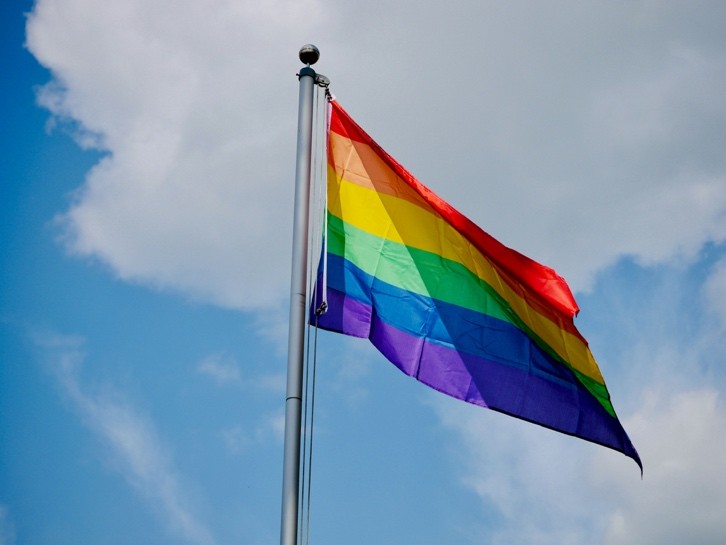
In 2025, Utah passed House Bill 77 (“HB 77”) without the Governor’s signature. HB 77, a controversial bill, is the first in the nation to ban non-sanctioned flags[1] from all public schools and government property. HB 77’s professed goal is to make classrooms neutral spaces but the bill’s sponsor “repeatedly constructed the bill to specifically ban pride flags in schools.”[2] Several key legal issues arise as to the constitutionality of HB 77 including but not limited to the First Amendment,[3] school speech doctrines, the Equal Protection Clause, and compelled neutrality versus speech suppression.
Historically, the Supreme Court utilizes different tests for determining if actions are unconstitutional.[4] One First Amendment test has distinguished between government and private speech.[5] A central question in determining the type of speech, one must first determine whose speech is HB 77 affecting? Even then, courts may determine that allowing certain symbols while banning others is discriminatory. Further legal analysis is required to compare which type of test the Supreme Court may utilize for this issue and if HB 77 would qualify as unconstitutional.
The School Speech Doctrine is a series of cases the Supreme Court decided that allow schools to regulate speech without violating the First Amendment.[6] Under the Hazelwood standard, schools can regulate speech in school sponsored activities if their actions are reasonably related to legitimate pedagogical concerns.[7] Thus, schools have greater deference to regulate speech that appears to be part of a school’s curriculum. Here, it is difficult to ascertain if HB 77 falls within any of the school speech doctrine standards. Additional case law is needed to determine when the action taken in HB 77 is protected or unconstitutional.
The HB 77 also implicates the Fourteenth Amendment. The Equal Protection Clause under the Fourteenth Amendment in part states “[n]o State shall make or enforce any law which shall abridge the privileges or immunities of citizens of the United States.”[8] HB 77 must have disparate impact or animus towards LGBTQ+ students or staff to be successful under this claim. Parties must also show they are part of a protected class, but generally courts are hesitant to allow claims that involve facially neutral policies.[9]
In a legal and philosophical framework, tensions arise when faced with the issue of neutrality versus censorship. Critics argue that there is a selective enforcement of neutrality that disproportionality affects minority groups.[10] To further agitate this issue, a potential loophole in HB 77 exists. Historic flags used in school curriculum, such as a Nazi or Confederate flags, may be permissible.[11] Additionally, lawmakers in Arizona, Alaska, Florida and North Carolina have recently introduced similar bills.[12] Idaho has also passed a similar ban—HB 41.[13]
Ultimately, several legal issues questioning the constitutionality of Utah’s HB 77 and other similarly worded bills persist. Related issues extend much further than flag bills and can include a student’s appearance, speech inside classrooms, transgender rights in sports, and bans on gender-affirming healthcare.[14] Both the U.S. Supreme Court and lower courts have ruled on both sides of the isle. For example, in United States v Skrmetti, the Supreme Court upheld a Tennessee law banning gender-affirming care and medical treatments for transgender minors.[15] Whereas the Supreme Court still has cases challenging transgender rights in sports under review.[16] During this interim, Utah’s Governor has suggested that HB 77 should be repealed because it creates a cultural war that doesn’t “solve problems [the bill] intends to fix.”[17]
[1] HB 77 states, in part, that it “prohibits a government entity or employee of a government entity from displaying a flag in or on the grounds of government property except certain exempted flags” and does not apply to the following exceptions: (a) official flag of the United States, (b) the official Utah state flag, (c) the official flag of another country or state, (d) a flag representing a city or official municipality, (e) a flag for an official branch of the U.S. military, (g) a flag representing an Indian tribe, (h) an official flag of a college or University, (i) historic versions of a flag, (j) an official public school flag, (k) official flag of the United States Olympics.” H.B. 77, 2025 Gen. Sess. § 3 (Utah 2025).
[2] Addy Baird, Pride flag ban: Utah becomes first state to outlaw pride flags in government buildings, schools, THE SALT LAKE TRIBUNE (Mar. 28, 2025, 7:54 AM), https://www.sltrib.com/news/politics/2025/03/28/pride-flag-ban-utah-first-state/.
[3] U.S. Const. amend. I. “Congress shall make no law respecting an establishment of religion, or prohibiting the free exercise thereof; or abridging the freedom of speech, or of the press; or the right of the people peaceably to assemble, and to petition the Government for a redress of grievances.” Id. (emphasis added).
[4] Morgan Munroe & Sarah Kessler, Levels Scrutiny Applied by State Courts, Explained, STATE CT. REP. (May 12, 2025), https://statecourtreport.org/our-work/analysis-opinion/levels-scrutiny-applied-state-courts-explained.
[5] See Shurtleff v. City of Bos., 596 U.S. 243, 260 (2022).
[6] Broadly this includes 3 categories including the Tinker, Fraser, and Hazelwood standards. See generally Tinker v. Des Moines Indep. Cmty. Sch. Dist., 393 U.S. 503, 515 (1969); Bethel Sch. Dist. No. 403 v. Fraser, 478 U.S. 675, 688 (1986); Hazelwood Sch. Dist. v. Kuhlmeier, 484 U.S. 260, 277 (1988).
[7] Kuhlmeier, 484 U.S. at 274.
[8] U.S. Const. amend. XIV, § 1.
[9] See generally Bostock v. Clayton Cnty., Georgia, 590 U.S. 644, 684 (2020).
[10] The Utah Pride Center expressed a similar view in relation to Utah’s HB 77 quoting “it is a deliberate attempt to erase LGBTQIA+ visibility from the public sphere.” Addy Baird, Pride flags banned from Utah schools and government buildings—if Gov. Cox agrees with lawmakers, THE SALT LAKE TRIBUNE (Mar. 6, 2025, 2:00 PM), https://www.sltrib.com/news/politics/2025/03/06/pride-flags-banned-utah-schools/.
[11] Addy Baird, Nazi flags can fly in Utah schools, but not pride flags, GOP lawmaker says, THE SALT LAKE TRIBUNE (Feb. 13, 2025, 7:20 PM), https://www.sltrib.com/news/politics/2025/02/13/nazi-flags-can-fly-utah-school-not/.
[12] Jerod MacDonald-Evoy, Bill barring LGBTQ pride flags from AZ government buildings advances, despite free speech worries, AZ Mirror (Jan. 23, 2025, 12:30 PM), https://azmirror.com/briefs/bill-blocking-lgbtq-pride-flags-from-az-government-buildings-moves-forward-despite-free-speech-worries/; Mark Sabbatini, New prefile bills includes ban on ‘political’ flags by ally of Dunleavy, who has ′pro-life’ flag at mansion, Juneau Empire (Jan. 17, 2025, 10:31 PM), https://www.juneauempire.com/news/new-prefile-bills-includes-ban-on-political-flags-by-ally-of-dunleavy-who-has-pro-life-flag-at-mansion/; Statewide group denounces bill to ban flags representing ‘political viewpoint’ in Florida, WUSF NPR (Jan. 7, 2025, 5:46 AM), https://www.wusf.org/politics-issues/2025-01-07/statewide-group-denounces-bill-to-ban-flags-representing-political-viewpoint-in-florida; Shaun Gallagher, Proposed bill aims to ban specific flags at NC government buildings, WCNC Charlotte (March 13, 2025 8:16 AM), https://www.wcnc.com/article/news/politics/north-carolina-politics/blm-pride-flags-prohibited-public-buildings-new-nc-bill/275-41bc4d71-eb1d-4b11-afc4-de1dabd16523.
[13] H.B. 41, 2025 Leg., First Reg. Sess. (Idaho 2025).
[14] Dara E. Purvis, Transgender Students and the First Amendment, 104 B.U. L. REV. 435, 502 (2024).
[15] United States v. Skrmetti, 145 S. Ct. 1816, 1838 (2025).
[16] The Fourth Circuit found a law in West Virginia banning transgender women from participating on women’s sports teams as being unconstitutional under Title IX. See B.P.J. v. West Virginia, 98 F.4th 542 (4th Cir. 2024), cert. granted, No. 24-43 (2025).
[17] Baird, supra note 2.