
Phones Down, Pencils Up: The Emerging Legal Landscape of State Bans on Student Cell Phones
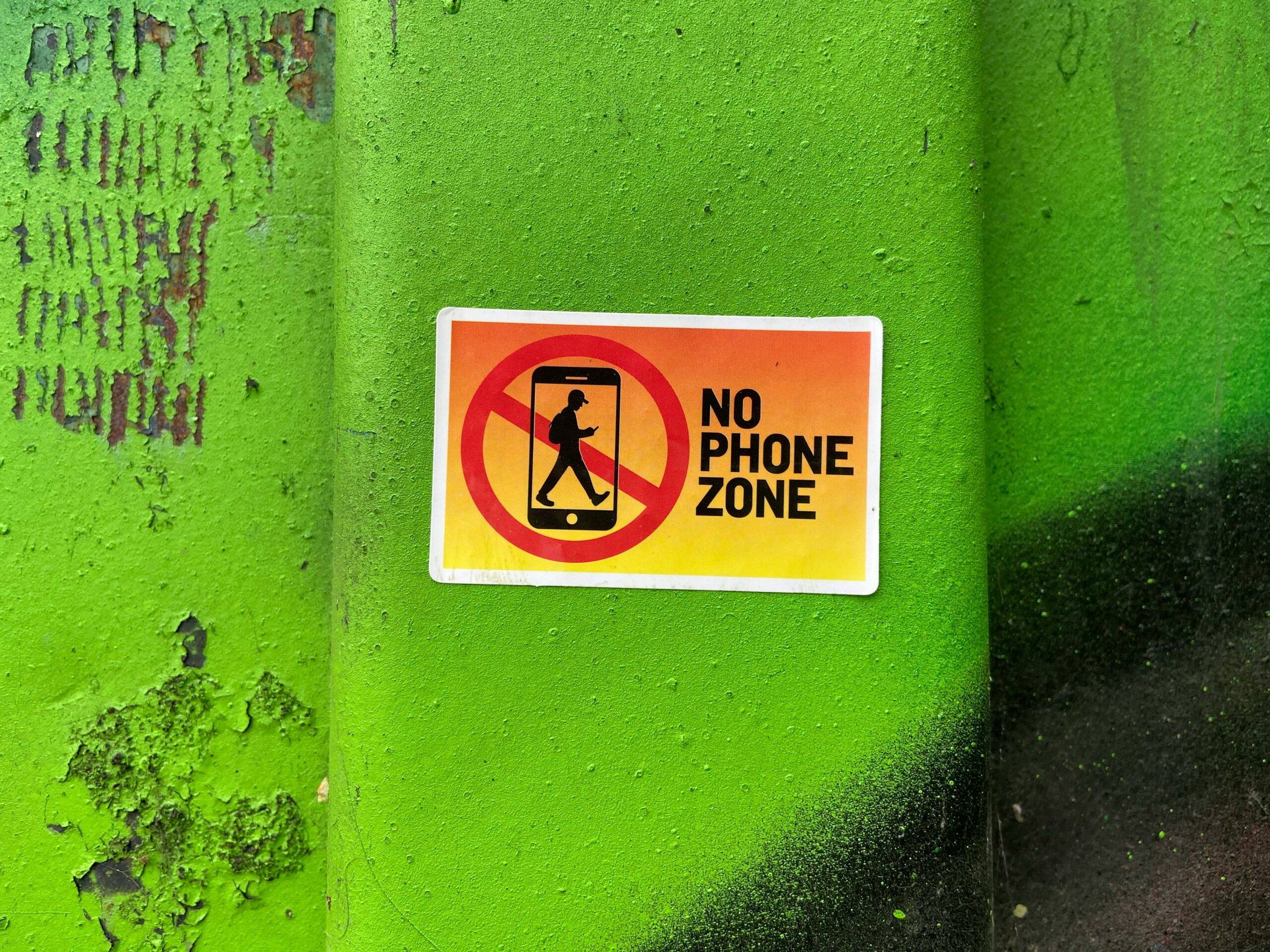
By Brian Geraghty
Introduction
Few objects command more loyalty from American teenagers than the glowing rectangles in their pockets. Cell phones have become lifelines, entertainment consoles, and—at least in theory—educational tools. Yet they are also distractions of the highest order. As one New Hampshire student recently admitted, a statewide ban on school-day phone use forced him to actually “do work” during downtime.[1] That confession might make any teacher smile.
This blog post examines the emerging legal and policy landscape of cell-phone bans in public schools, with particular focus on New Hampshire’s new statewide “bell-to-bell” prohibition. It also considers Vermont’s parallel efforts, nationwide trends, and developments abroad. While bans like New Hampshire’s likely advance learning and social well-being, their legal implications—touching on parental rights, due process, and even the First Amendment—remain unsettled.
I. States Look to Restrict Cell Phones in Schools
A. New Hampshire’s Bell-to-Bell Ban
In June, New Hampshire Governor Kelly Ayotte signed a state budget bill including a legislative amendment requiring school boards and charter school trustees to adopt “bell-to-bell” cell-phone bans.[2] Under the new law, students are barred from using cellphones from the first bell to start instructional time until end-of-day dismissal, including during lunch and class transitions.[3] Exceptions exist for medical devices (such as insulin pumps and glucose sensors), accommodations identified in individualized education programs (IEPs), plans developed under Section 504 of the Rehabilitation Act of 1973, and language-access needs under Title VI of the Civil Rights Act of 1964.[4]
Governor Ayotte championed the measure as a way to “restor[e] classrooms as spaces dedicated to learning, collaboration, and student well-being.”[5] A gubernatorial press release framed it as a win for students’ focus, teachers’ sanity, and parents’ peace of mind.[6] Supporters cited research linking excessive screen use with adolescent anxiety, depression, and sleep deprivation, as well as school-level data showing reduced behavioral issues and cyberbullying when phones are banned.[7] In other words, New Hampshire has embraced the radical notion that schools are for education, not Snapchat.
B. Vermont: Following Close Behind
Neighboring Vermont has enacted a similar law to take effect for the 2026–27 school year.[8] But many Vermont schools have already experimented with restrictions. Teachers at Spaulding High School in Barre require students to surrender phones on a classroom counter at the start of class.[9] Harwood Union Middle and High School adopted Yondr magnetic lock pouches, funded in part by leftover federal COVID-19 relief money.[10] Thetford Academy, serving as a public school for several towns, banned phones even before the statewide mandate after a community advocacy campaign garnered strong support for immediate action.[11]
Vermont educators report familiar frustrations: students distracted by social media, parents texting midday, and the awkward phenomenon of a cafeteria full of teenagers staring silently at screens.[12] Teachers describe phone-free days as restoring authentic conversation and student attentiveness.[13] Don Tinney, president of the Vermont chapter of the National Education Association, posed the rhetorical question: “If we can’t get a handle on this in our schools, where will we get control over these digital devices?”[14]
C. Nationwide Developments
New Hampshire and Vermont are hardly alone. More than half of U.S. states have adopted restrictions.[15] Texas, for instance, passed House Bill 1481 in May, 2025, requiring districts to curtail phone use.[16] Teachers there report more eye contact and—quaintly—students rediscovering Uno cards.[17]
New York recently mandated magnetic pouches statewide.[18] Students keep their phones but cannot unlock them until the school day ends, a system praised by administrators but tested by enterprising teens who attempt to dismantle the pouches.[19] Florida led the charge in 2023 by banning phones outright during instructional hours, and other states quickly followed.[20]
The sheer diversity of approaches—total bans, pouch systems, “out of sight, out of mind” policies—underscores the lack of consensus on how to balance discipline, safety, and practicality.
II. Benefits and Concerns
The reasons to restrict phones are well-documented. Phones distract from academic work, facilitate cheating, perpetuate cyberbullying, and exacerbate mental health challenges.[21] Schools report that bans improve engagement and reduce disciplinary incidents.[22] The U.S. Surgeon General has even warned that social media poses “a profound risk of harm” to youth mental health and well-being.[23]
Yet there are counterpoints. Phones provide parents peace of mind during emergencies, assist with after-school logistics, and serve as educational tools when properly integrated.[24] Some parents view confiscation or extended retention of devices as infringing upon their due process rights to direct their children’s upbringing.[25] Enforcement also strains school resources and may foster resentment.
Even students themselves are ambivalent. As one Vermont high schooler acknowledged, “every student … does know they’re addicted to their phone,” but that does not make giving it up easy.[26]
III. Legal Framework and Challenges
A. Parental Rights and Due Process
A prominent concern is whether school bans impermissibly interfere with parents’ constitutional rights. Plaintiff families have argued that confiscation and retention policies beyond school hours may violate the Fourteenth Amendment due process rights of parents to direct the upbringing of their children.[27] Courts have historically recognized this right, though its scope in the educational context remains contested.[28]
B. Free Speech and the First Amendment
Two classic precedents—Tinker[29] and Hazelwood[30]—establish that students retain constitutional rights but that schools may regulate expression when necessary to preserve order or educational purpose. Some scholars suggest that outright phone bans could implicate students’ right to receive information in the digital era.[31] Mary Beth Tinker herself has expressed skepticism about unfettered phone use, noting the documented harms to youth health.[32]
Still, a phone is not inherently “speech,” and bans typically regulate the device rather than content. Courts would likely uphold restrictions narrowly tailored to educational goals, particularly with exceptions for medical and disability accommodations.[33]
C. Privacy and Enforcement
Confiscation policies raise privacy concerns. For example, what happens if a teacher inadvertently views private messages or data on a seized device? Scholars caution that schools must tread carefully to avoid Fourth Amendment violations.[34]
D. Comparative Perspective: The United Kingdom
The debate is not uniquely American. In July, two British fathers launched a legal challenge against the British Department for Education, arguing that failure to mandate schoolwide bans violated children’s human rights.[35] They seek a judicial review to compel a nationwide prohibition, citing concerns about exposure to pornography and violent content.[36] Meanwhile, political leaders remain divided; current Prime Minister Keir Starmer has dismissed mandatory bans as unnecessary, noting that most schools already restrict phones.[37]
The British litigation highlights a novel twist: framing smartphone access as a human rights issue, not merely a matter of discipline. Whether such arguments will persuade British courts remains to be seen, but the case underscores the global resonance of the debate.
IV. Policy Considerations
From a policy standpoint, bell-to-bell bans simplify enforcement, promote equity, and minimize distraction. But implementation costs—pouches, staff training, security infrastructure—can be substantial.[38] Moreover, blanket bans may ignore legitimate educational uses of smartphones for language learning, research, or accessibility. A nuanced approach may be preferable, though nuance is often harder to enforce than a flat rule.
Ultimately, the law grants schools broad latitude to regulate student conduct, provided policies are reasonable, nondiscriminatory, and respectful of constitutional limits. Still, as potential litigation looms, states would be wise to draft bans with explicit exceptions, parental consultation, and annual review processes—as New Hampshire’s law already requires.[39] Of course, including student voices where feasible should certainly be encouraged as well.[40]
Conclusion
Some teenagers may view phone bans as cruel and unusual punishment, but the evidence suggests otherwise. From New Hampshire to Texas, schools report increased focus, better mental health, and even more human conversation when phones are set aside. That said, unresolved legal questions remain. How far schools can go without infringing parental rights? Do such bans implicate free speech rights? How enforcement avoids privacy violations?
New Hampshire’s bell-to-bell model seems to offer a promising blueprint. It balances firm restrictions with necessary exceptions, signals a cultural shift toward reclaiming schools as learning spaces, and recognizes the gravity of the distraction problem. Whether courts ultimately bless such laws will determine if “phone-free schools” become a permanent fixture or a passing experiment. For now, though, the message is simple: put the phone away—your civics assignment awaits.
[1] Alex Hanson, New State Laws Banning Cellphones Force Students and Schools to Adapt, Valley News (Sept. 5, 2025), https://vnews.com/2025/09/05/nh-vermont-school-phone-policy/.
[2] N.H. Rev. Stat. Ann. § 189:1-a (2025).
[3] N.H. Dep’t of Educ., Technical Advisory: Guidance to Public and Chartered Public Schools for Implementing HB2’s “Bell to Bell” Prohibitions on Student Cell Phones and Personal Electronic Communication Devices (2025).
[4] N.H. Rev. Stat. Ann. § 189:1-a (2025).
[5] N.H. Dep’t of Educ., supra note 3.
[6] Press Release, Governor Kelly Ayotte, Bell-to-Bell Ban on Cell Phones in Schools a Win for New Hampshire Students (June 26, 2025), https://www.governor.nh.gov/news/bell-bell-ban-cell-phones-schools-win-new-hampshire-students.
[7] Id.
[8] Vt. Stat. Ann. tit. 16, § 581 (2025).
[9] Alison Novak, Vermont Schools Are Banning Smartphones to Limit Distractions, Seven Days (Sept. 4, 2024), https://www.sevendaysvt.com/news/vermont-schools-are-banning-smartphones-to-limit-distractions-41761682/.
[10] Id.
[11] Hanson, supra note 1.
[12] Novak, supra note 9.
[13] Id.
[14] Id.
[15] Hanson, supra note 1.
[16] Nicholas Gutteridge, Texas Educators Praise New School Cellphone Ban, Tex. Trib. (Sept. 10, 2025), https://www.texastribune.org/2025/09/10/texas-cell-phone-ban-schools/.
[17] Id.
[18] Cara Tabachnick, Schools Across U.S. Turn to a Locked Magnetic Pouch as a Cellphone Ban Solution. Here’s What to Know, CBS News (Sept. 6, 2025), https://www.cbsnews.com/news/yondr-pouches-school-cell-phone-ban/.
[19] Id.
[20] Gutteridge, supra note 16.
[21] Nicole Thieneman Maddox, Silencing Students’ Cell Phones Beyond the Schoolhouse Gate: Do Public Schools’ Cell Phone Confiscation and Retention Policies Violate Parents’ Due Process Rights?, 41 J.L. & Educ. 261, 262 (2012).
[22] Press Release, Governor Ayotte, supra note 6.
[23] Novak, supra note 9.
[24] Id.
[25] Maddox, supra note 21.
[26] Novak, supra note 9.
[27] Maddox, supra note 21.
[28] See, e.g., Koch v. Adams, 361 S.W.3d 817, 821 (Ark. 2010) (rejecting a student’s challenge to a school policy that allowed cell-phone confiscation during class, finding the policy constitutional and within the school’s authority to enforce discipline under such rules); Price v. N.Y.C. Bd. of Educ., 855 N.Y.S.2d 530, 537 (N.Y. 2008) (upholding city’s ban on students bringing cell phones to school, reasoning that it was reasonably related to educational objectives and did not unduly restrict communication outside school hours).
[29] Tinker v. Des Moines Independent Community School District, 393 U.S. 503 (1969).
[30] Hazelwood School District v. Kuhlmeier, 484 U.S. 260 (1988).
[31] Rob Miraldi, If We’re Taking Kids’ Phones at School, Why Can’t We Talk to Them About Bans?, Leader (July 16, 2025), https://www.the-leader.com/story/opinion/2025/07/16/school-cell-phone-bans-and-the-first-amendment-opinion/85216226007/.
[32] Id.
[33] N.H. Dep’t of Educ., supra note 3.
[34] Neubia L. Harris, Considerations and Legal Implications of Banning Cell Phones in School, NC Educ. Law. Blog (Mar. 25, 2025), https://www.neubiaharrislaw.com/post/considerations-and-legal-implications-of-banning-cell-phones-in-school.
[35] Louise Eccles, Parents Heading for Court to Make Smartphones in Schools Illegal, Sunday Times (July 12, 2025), https://www.thetimes.com/uk/education/article/parents-heading-for-court-to-make-smartphones-in-schools-illegal-f5nk75scz.
[36] Id.
[37] Id.
[38] Gutteridge, supra note 16.
[39] N.H. Dep’t of Educ., supra note 3.
[40] Miraldi, supra note 29.