
The Daubert Standard: Why the Standard Needs to be Strengthened
By Righton Smith
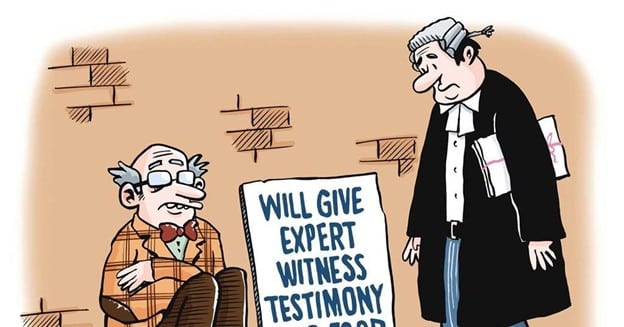
The American criminal justice system grapples with a troubling truth: many convictions once deemed just are based on a foundation of scientific evidence that crumbles under scrutiny. As the scientific community advances, it increasingly abandons forensic methods once routinely admitted in court. This exposes a flaw not only in outdated methodology but in the very structure of how expert testimony is presented to juries. To restore confidence and prevent future wrongful convictions, courts should adopt a dual approach: vigorously enforcing scientific reliability standards and utilizing court-appointed experts to ensure impartiality and objectivity.
Cases like McCrory v. Alabama illustrate the urgency of this crisis.[1] McCrory was convicted of murder in 1985 largely based on forensic bitemark testimony.[2] Years later, the scientific community soundly condemned bitemark analysis, and McCrory’s own original expert fully recanted his testimony.[3] This is not an isolated issue; the National Academy of Sciences reported in 2009 that many subjective forensic methods, including bitemark analysis and hair microscopy, lacked a rigorous scientific basis.[4] Statistics reveal the scale of the problem: more than 1,000 exonerations since 1989 rest partly on forensic evidence found to be false or misleading.[5]
Historically, scientific evidence gained entry to the courtroom through the Frye standard, which requires the scientific principle to be “sufficiently established to have gained general acceptance in the particular field to which it belongs.”[6] In 1993, the Supreme Court in Daubert v. Merrell Dow Pharmaceuticals, Inc. superseded Frye.[7] This established a powerful gatekeeping mandate for trial judges under the Federal Rules of Evidence, Rule 702.[8] This rule requires judges to ensure all scientific testimony is not only relevant but also rests on a reliable foundation.[9] The inquiry focuses on whether the underlying reasoning or methodology is scientifically valid.[10]
The Daubert framework provides judges with crucial tools for this assessment. The assessment focuses solely on the principles and methodology rather than the conclusion generated.[11] This includes the testability, peer review, error rate, and general acceptance of the science at hand.[12] First, testability is whether the theory or technique “can be (and has been) tested.”[13]Second, a “peer review” is a submission that undergoes scrutiny by the scientific community.[14] It is a component of “good science” and increases the likelihood of detecting flaws.[15] Third, an error rate considers the known or potential rate of error and the existence and maintenance of the standards that control the technique’s operation.[16] Finally, there must be widespread acceptance or “general acceptance” of the science used within the community.[17] This thorough, validity-based screening process is essential. Forensic science practices demonstrate “wide variability” in terms of methodology, reliability, potential errors, and general acceptability.[18] Trial courts acknowledge by fully embracing the Daubert standard that scientific “knowledge” must be grounded in the procedures of science.[19] Expert testimony cannot be based on “subjective belief or unsupported speculation.”[20]
Even when scientific methodology is sound, the presentation of expert evidence under the current model introduces risks of bias and misrepresentation. The Confrontation Clause of the Sixth Amendment ensures an accused’s right “to be confronted with the witnesses against him.”[21] The Supreme Court has repeatedly affirmed that this protection applies fully to forensic analysts who “bear testimony” against the defendant.[22] Prosecutors take shortcuts when there is a large volume of evidence, especially in drug cases. Prosecutors use affidavits or surrogate analysts to introduce laboratory results without calling the original testing analyst.[23] The rationale often cited is that the lab reports, or the original analyst’s notes, are merely “basis evidence” that supports the testifying expert’s independent opinion.[24] Therefore, the evidence is not offered “for the truth of the matter asserted” that would violate rules against hearsay in courts.[25]
The Supreme Court definitively rejects this evasive tactic in Smith v. Arizona. This decision affirms that when an expert relies on an absent analyst’s statements to support an opinion, those statements come into evidence for their truth.[26] Allowing a surrogate expert unconnected to the original testing to serve as a “mouthpiece” for the absent analyst effectively nullifies the defendant’s right to cross-examine the truth witness about their work, qualifications, or potential conflicts.[27] The right to confrontation is crucial because the nature of the legal system compromises the neutrality of the process. A study by the National Academy of Sciences and Melendez-Diaz v. Massachusetts notes that many forensic laboratories are overseen by law enforcement agencies, which create incentives for analysts to “sacrifice appropriate methodology for the sake of expediency.”[28] Cross-examination is the constitutional “crucible” designed to weed out not only the fraudulent analyst but the incompetent ones as well, exposing the flaws in “honesty, proficiency, and methodology.”[29]
Stronger reliability standards mitigate the introduction of “junk science.” These standards eliminate the inherent bias and conflicts of interest and require addressing the core nature of expert witness selection. The solution lies in empowering judges to secure objective and impartial expertise through the appointment of court experts.[30] Rule 706 of the Federal Rules of Evidence explicitly grants the Court discretion to “procure the assistance of an expert of its own choosing.”[31] This expert, once appointed, advises the parties of their findings, may be deposed and called to testify by any party (including the court), and “may be cross-examined by any party, including the party that called the expert.”[32]
Implementing court-appointed experts can offer several advantages. A court-appointed expert operates outside the financial and institutional pressures faced by experts retained by the prosecution or defense, whose compensation may be paid by the court in a criminal case.[33] This mitigates the risk of bias in adversarial selection. By retaining an expert focused purely on scientific validity, the court can better understand complex technical issues and ensure that the testimony presented meets the appropriate reliability threshold established by Daubert.[34] Relying exclusively on party-retained experts often results in confusing battles of experts that fail to clarify scientific issues for the jury. An independent expert can effectively present foundational scientific facts.
Opponents to this argument fear that empowering judges as strict gatekeepers and relying on court-appointed experts might hinder the introduction of innovative theories or constrain adversarial practice. The Supreme Court has made clear, however, that the Federal Rules of Evidence were not designed for “the exhaustive search for cosmic understanding but for the particularized resolution of legal disputes.”[35] When a legal conviction or judgment of high consequence hinges on scientific fact, the pursuit of reliable evidence should supersede the traditional clash of narratives by expert witnesses.
In sum, the criminal justice system must protect its integrity by admitting only reliable and objective scientific evidence. Outdated forensic methods and biased expert testimony has exposed the flaws that erode the fairness of trials and public trust. To truly honor the constitutional rights of the accused and uphold the integrity of our system, the expert witness standard must be strengthened by demanding rigorous scientific validity and implementing the tool of court-appointed experts under Rule 706 to secure neutral, scientifically valid findings.[36] The cost of continued reliance on faulty or biased science is simply too high.[37]
[1] McCrory v. Alabama, 144 S. Ct. 2483 (2024).
[2] McCrory, 144 S. Ct. at 2483–2484. (Sotomayor, S., concurring).
[3] Id. at 2483–2485. (Sotomayor, S., concurring).
[4] Id. at 2484 (Sotomayor, S., concurring).
[5] Id. at 2483 n.1 (Sotomayor, S., concurring).
[6] Frye v. United States, 293 F. 1013, 1014 (D.C. Cir. 1923).
[7] Daubert v. Merrell Dow Pharms., Inc., 509 U.S. 579 (1993).
[8] Fed. R. Evid. 702.
[9] Daubert, 509 U.S. at 580, 589.
[10] Id. at 592.
[11] Id. at 594–95.
[12] Id.
[13] Daubert v. Merrell Dow Pharms., Inc., 509 U.S. 579, 593–94 (1993).
[14] Id. at 593–94.
[15] Id.
[16] Id. at 594.
[17] Id.
[18] Melendez-Diaz v. Massachusetts, 557 U.S. 305, 313 (2009) (quoting National Academy of Sciences, Strengthening Forensic Science in the United States: A Path Forward, 6–7).
[19] Daubert, 509 U.S. at 589–90.
[20] Id.
[21] U.S. CONST. amend. VI; Melendez-Diaz, 557 U.S. at 313.
[22] Melendez-Diaz, 557 U.S. at 320–21 (2009); Smith v. Arizona, 602 U.S. 779, 785–86 (2024).
[23] Smith, 602 U.S. at 785–87.
[24] Id. at 787–88.
[25] Id. at 793–94.
[26] Id. at 780, 798.
[27] Id. at 798–801.
[28] Melendez-Diaz, 557 U.S. at 305, 318.
[29] Id. at 318–19, 321–22, 325–26.
[30] Fed. R. Evid. 706.
[31] Daubert, 509 U.S. at 595; Fed. R. Evid. 706.
[32] Fed. R. Evid. 706(b), 706(c)(1).
[33] Id.
[34] Daubert, 509 U.S. at 589–590; Fed. R. Evid. 702.
[35] Daubert, 509 U.S. at 579, 596–597.
[36] Fed. R. Evid. 706.
[37] McCrory v. Alabama, 144 S. Ct. 2483, 2483 (2024) (Sotomayor, S., concurring).